

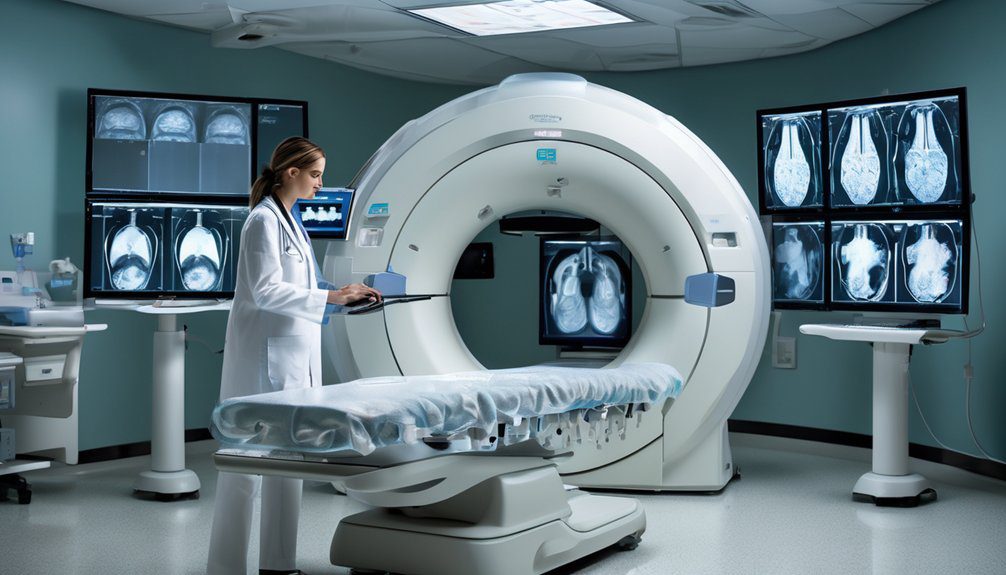
CT scan reports take time because the process includes several essential steps. First, detailed images must be acquired and processed accurately. Then, a radiologist carefully analyzes these images to identify any issues, which can take longer for complex cases or high workloads. Afterward, reports undergo thorough quality checks to guarantee accuracy for medical decisions. Equipment and staffing levels also affect timing. Understanding these factors helps clarify why report delivery varies and what influences turnaround times further ahead.
Understanding the Image Acquisition Process
Before the CT scan images can be analyzed and reported, the image acquisition process must be completed accurately and efficiently. You’ll find that this stage involves capturing detailed images through precise scanning techniques.
Once the images are captured, they undergo image processing to enhance quality and prepare for review. Then, data transmission plays a vital role, as the processed images are sent securely to storage systems or specialists for further evaluation.
Ensuring accuracy and speed during acquisition and transmission is essential, so you receive reliable results promptly, maintaining the freedom to make timely health decisions.
The Role of Radiologist Analysis
Many aspects of the CT scan reporting process depend on the radiologist’s careful analysis of the images.
You should know that radiologists handle a significant workload, which affects how quickly they complete image interpretation. They must examine each scan thoroughly to identify any abnormalities or concerns, ensuring accuracy.
This detailed review requires time and focus, especially when dealing with complex cases or numerous scans daily. Although technology aids their work, the radiologist’s expertise remains vital.
Understanding this role helps you appreciate why report times can vary, reflecting the balance between thoroughness and efficiency in medical imaging.
Report Generation and Quality Assurance
Once the radiologist completes their analysis, the report generation phase begins, where findings are carefully documented to assure clear communication with the referring physician.
During this step, maintaining report accuracy is critical, as even slight errors can lead to misinterpretation.
To support this, quality assurance processes review the report to catch inconsistencies and confirm clarity.
While thorough checks may add time, they enhance workflow efficiency by preventing the need for corrections later.
This balance assures you receive a reliable, precise report that supports informed medical decisions without unnecessary delays.
Factors Influencing Turnaround Time
Although turnaround times for CT scan reports can vary, several key factors consistently influence how quickly you receive the final document.
Patient preparation plays an essential role; if preparation steps aren’t properly followed, delays can occur due to the need for repeat scans or additional images.
Equipment maintenance also impacts timing—well-maintained machines reduce downtime and produce clearer images, allowing faster analysis.
Staffing levels, case complexity, and workflow efficiency further affect speed.
Understanding these elements helps you appreciate why report times differ and why some delays are unavoidable, ensuring you’re better informed about the process behind your CT scan results.
Frequently Asked Questions
How Should I Prepare Before a CT Scan Appointment?
You should follow pre scan instructions carefully, like fasting if needed, and inform your doctor about medication considerations. Stay relaxed and free-spirited, so you’re ready and comfortable for your CT scan appointment.
Are CT Scans Safe for Children and Pregnant Women?
CT scan safety varies; you should avoid CT scans during pregnancy unless essential due to radiation exposure risks. For children, doctors minimize doses carefully, ensuring safety while still capturing needed images to protect their freedom and health.
What Are Common Risks Associated With CT Scans?
You might face risks like radiation exposure, which could increase cancer chances over time, and allergic reactions to contrast dye. Staying informed helps you make confident choices about your health freedom and safety during CT scans.
Can I Get a Copy of My CT Scan Images?
You can absolutely request a copy of your CT scan images. As a patient, it’s your right to access them. Just submit an image request to your healthcare provider, and they’ll provide your files promptly.
How Much Does a CT Scan Typically Cost?
CT scan pricing varies widely, but typically ranges from $300 to $1,500. If you’ve got insurance coverage, your out-of-pocket costs might be lower. Always check with your provider to keep your freedom to choose clear.
