

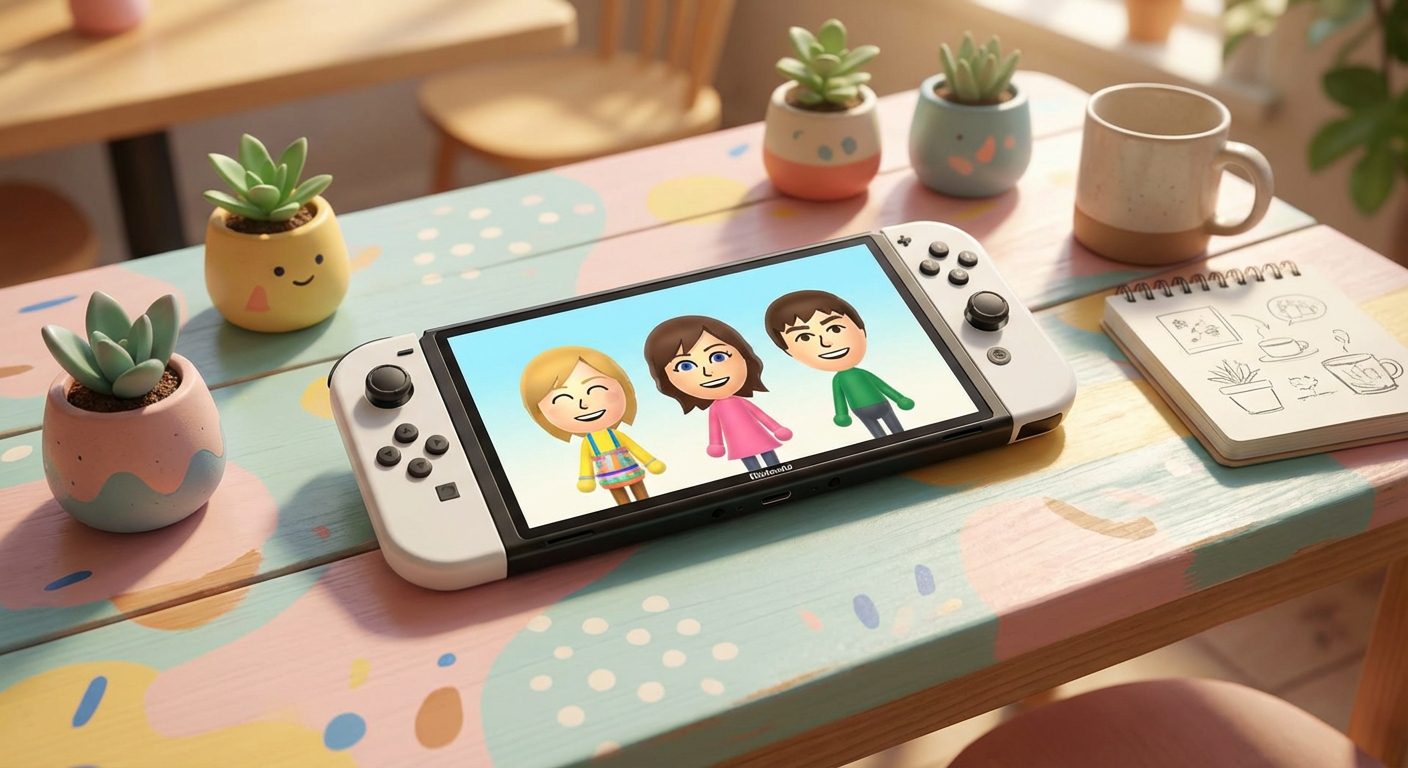
Tomodachi Life: Living the Dream launched its free demo on the Nintendo eShop on March 25, 2026. The Welcome Version demo dropped without any pre-announcement, caught players off guard, and immediately climbed the eShop download charts. It is the first playable slice of the franchise in over a decade, and people who had never touched the original 3DS version are creating Mii characters of their friends and getting hooked within the first hour.
The full game arrives April 16, 2026, on both Nintendo Switch and Nintendo Switch 2. At a time when the Switch 2 library is still building momentum, a surprise social sim with mass appeal is exactly the kind of title that makes the platform feel alive.
What the Tomodachi Life Demo Actually Contains
The demo is titled Tomodachi Life: Living the Dream – Welcome Version, and it is not a short teaser. You get access to the full Mii creation system, the ability to populate your island with residents, and enough of the social mechanics to understand what makes this series tick. Nintendo confirmed that save data transfers directly to the full game, so any Mii characters you build and any progress you make carries over on April 16.
There is also an incentive built into completing the demo: a hamster costume your Mii characters can wear, exclusive to players who finish the Welcome Version. Small detail, but it is the kind of thing that pushes completionists to actually play through rather than just download and ignore.
The original Tomodachi Life launched on the Nintendo 3DS back in 2014 and sold over 6.5 million copies worldwide according to Nintendo sales data. For a handheld exclusive that never received a western sequel, that number represents a fanbase that has been waiting 12 years for exactly this moment.
What Is New in Tomodachi Life: Living the Dream
This is not a port or a remaster. Nintendo announced the game via a dedicated Direct presentation on January 29, 2026, and outlined several additions that go beyond what the 3DS version offered.
Mii customization has been expanded with face parts that are entirely new to this entry, including more granular control over personality traits, energy levels, and individual quirks. You can now assign specific catchphrases that Miis will use in dialogue, and behavioral quirks such as how a character enjoys food or sleeping habits add layers of personality that the original never had.
The island-building component is more substantial this time. Players can place and reposition homes, shops, restaurants, and decorative elements. The Palette House Workshop, a new addition, lets you design custom pets, clothing, house exteriors, and original items from scratch. Nintendo described it as a creative workshop that gives players an outlet beyond simply reacting to Mii behavior.
Time in the game runs on the real-world clock, the same mechanic that made Animal Crossing: New Horizons feel so persistently alive. Log in daily and your Miis will have had new experiences, formed new relationships, or gotten into new drama since your last visit. The game rewards consistent players rather than marathon sessions.
The game is also compatible with Nintendo Switch 2, and players on the newer hardware benefit from the Switch 2 Handheld Mode Boost, which sharpens frame delivery and visual clarity on supported titles. It is not a Switch 2 exclusive, but the improved hardware means a noticeably smoother experience if you have already upgraded.
Fan Reactions to the Switch 2 Demo
Reddit r/nintendo community lit up within hours of the demo going live. The thread about the Tomodachi Life: Living the Dream demo reached the front page of the subreddit with hundreds of comments from players who had never played the 3DS original, suddenly reporting they had been playing for three hours straight.
Nintendo Life first-impressions writeup, published March 24, 2026, included a first-time player diary entry. Reviewer Alana described the experience as one that thrives off of normal interactions laced with the absurd, and it constantly delivers. That framing, everyday moments with an unpredictable twist, is precisely why the series has maintained such a passionate following for over a decade.
The demo also serves as a proof point for players who questioned whether the Switch 2 library had enough variety. April 2026 is shaping up to be one of the strongest months yet for the platform, with Polygon listing Tomodachi Life: Living the Dream alongside Pokemon Champions and Pragmata as standout releases of the month.
For context on how the Switch 2 pricing strategy fits this lineup, our earlier breakdown of Nintendo Switch 2 cost expectations remains relevant reading.
Why This Game Works as a Switch 2 Showcase
It might seem counterintuitive to position a social life sim as showcase material for new hardware, but the logic holds. The Switch 2 biggest differentiators are not raw graphical power. They are features like Handheld Mode Boost, smoother system-level performance, and the way the hardware handles games requiring persistent background processing.
Tomodachi Life: Living the Dream runs its real-time clock, manages individual Mii personalities, tracks relationship states across dozens of characters simultaneously, and updates island state independently of your session. These are not graphically intensive demands, but they benefit from stable, responsive hardware. The Switch 2 system efficiency improvements make the experience feel more consistent than what the original hardware could deliver.
This is also a title with enormous demographic reach. The Tomodachi franchise skews younger and pulls in casual players who do not typically buy new consoles at launch. If the demo converts even a fraction of that audience into Switch 2 adopters by April 16, Nintendo has executed a smart soft-sell strategy with zero traditional marketing spend beyond a single Direct presentation.
The gaming industry is watching how the Switch 2 library fills out. Our breakdown of next-gen gaming trajectories puts the Switch 2 launch period in useful context alongside what Sony is planning with the PS6.
How to Download the Tomodachi Life Demo
The Welcome Version demo is free and available on the Nintendo eShop for both Switch and Switch 2. Navigate to the eShop, search for Tomodachi Life: Living the Dream, and the demo option appears directly on the product page. Pre-orders for the full game are live on the eShop and through My Nintendo Store.
The full game launches April 16, 2026. Given the demo instant popularity and the 12-year gap since the franchise last entry, pre-order momentum is likely to build significantly in the two weeks between demo launch and release day.
Frequently Asked Questions
Does the Tomodachi Life Switch 2 demo save carry over to the full game?
Yes. Nintendo confirmed that all progress and Mii character data from the Welcome Version demo transfers directly to the full Tomodachi Life: Living the Dream game when it launches on April 16, 2026.
Is Tomodachi Life: Living the Dream a Switch 2 exclusive?
No. The game launches on both the original Nintendo Switch and Nintendo Switch 2 on April 16, 2026. Switch 2 players benefit from Handheld Mode Boost for improved performance, but the game is fully playable on the original hardware.
What is the Tomodachi Life 2 release date?
Tomodachi Life: Living the Dream is the new entry in the series, functioning as a successor to the 2014 Nintendo 3DS game. It releases on April 16, 2026, for Nintendo Switch and Switch 2. This is the first new Tomodachi Life game in over 10 years.
What bonus do you get for finishing the Tomodachi Life demo?
Players who complete the Welcome Version demo receive a hamster costume for their Mii character to wear in the full game. The reward transfers automatically when you bring your demo save data into the full version on April 16.
What new features does Tomodachi Life: Living the Dream add?
The Switch entry adds expanded Mii customization with new face parts, a real-time clock that continues island life when offline, the Palette House Workshop for creating custom items and pets, more detailed personality traits, island-building tools, and up to eight Mii characters sharing a single home as roommates.