

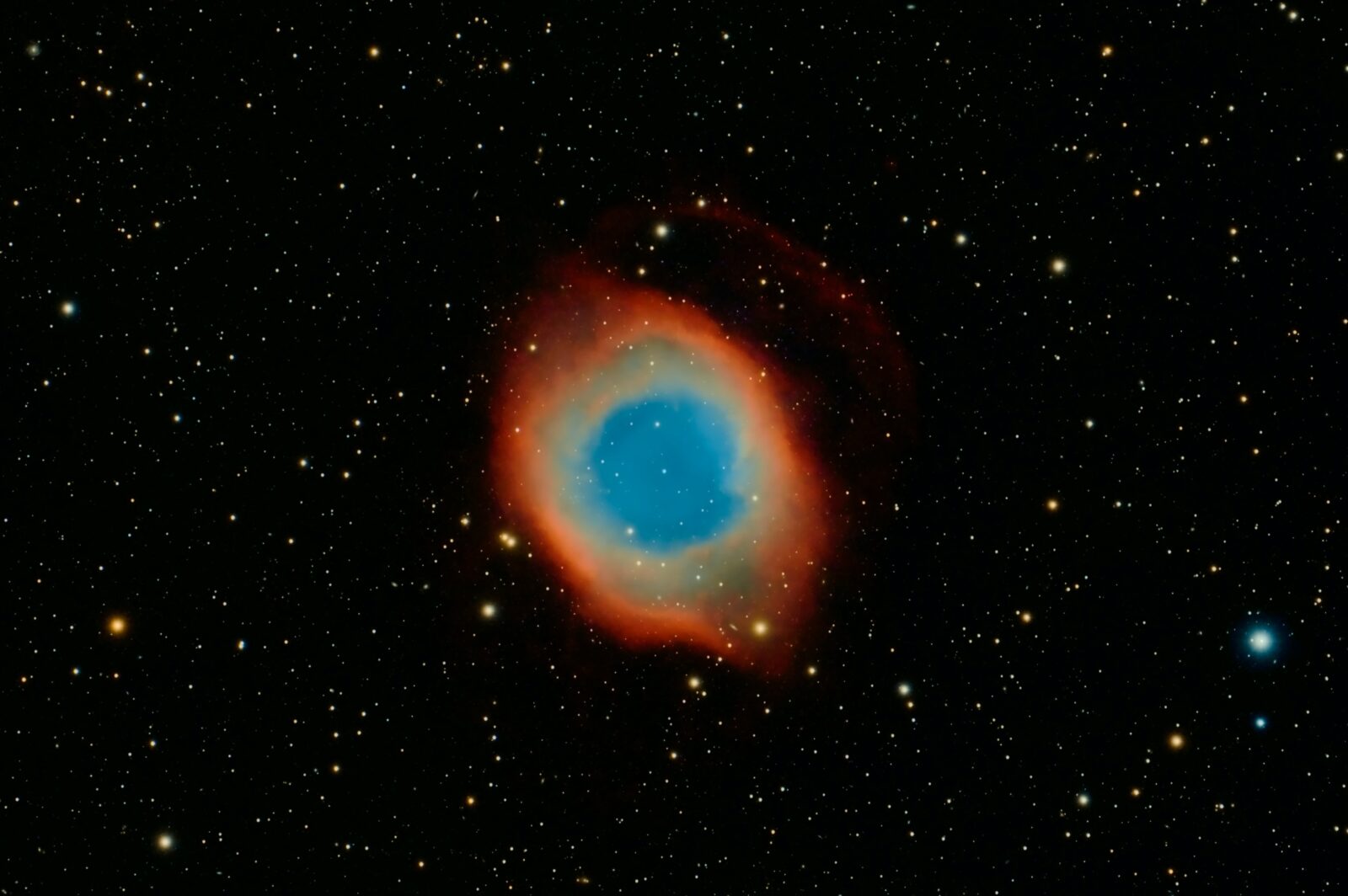
The Universe Has a Deadline. Are We Headed for a Big Crunch?
A team of astrophysicists just dropped a high-stakes prediction: the Universe won’t expand forever. In fact, it may reverse course in just 7 billion years—triggering a slow contraction that ends in a total cosmic collapse.
If this new model holds, it fundamentally reshapes our understanding of dark energy, time, and the fate of everything.
The Forecast: Maximum Size in 7 Billion Years, Then Collapse
Researchers from Cornell University and Shanghai Jiao Tong University built a predictive model using data from the Dark Energy Survey (DES) and the Dark Energy Spectroscopic Instrument (DESI). Their model challenges the consensus view that dark energy is a constant.
Here’s the timeline:
-
Current age of the Universe: 13.8 billion years
-
Time to peak expansion: ~7 billion years from now
-
Maximum expansion: ~69% larger than today
-
Collapse complete (Big Crunch): ~33.3 billion years total age
The model introduces a combination of dynamic dark energy and a negative cosmological constant—an exotic twist that could flip the Universe from expansion to contraction.
How Does the Big Crunch Work?
Think of the Universe like a giant rubber band. It stretches for a while, but if the inward pull becomes stronger than the outward push, the expansion halts. Then, everything begins to recoil. Galaxies, stars, and eventually atoms collapse into a single point.
That’s the Big Crunch—and this study puts it on a clock.
Why the Model Matters Now
Dark energy makes up ~70% of the Universe. For decades, it was assumed to be static. But newer data hints it might evolve. This study is among the first to model dark energy as a time-varying force, driven by hypothetical particles like axions.
This isn’t just theory. Upcoming observational tools like the Euclid Space Telescope and Vera Rubin Observatory will test whether dark energy behaves dynamically. That means this model could soon be verified—or completely debunked.
Key Takeaways
-
The countdown has (maybe) started. If the model’s correct, the Universe has ~20 billion years left before a full collapse.
-
Our understanding of dark energy is still limited. Current models rely on assumptions that new data might overturn.
-
This research introduces a measurable timeline. That’s rare in cosmology, and it positions us to refine or replace our current framework.
So, Should You Panic?
Not even close. The Sun dies in ~5 billion years. The Milky Way collides with Andromeda long before any universal collapse. But this model isn’t about fear—it’s about understanding the rules of the cosmic game.
This isn’t speculative fluff. It’s a major pivot in how we think about expansion, entropy, and time itself.
If this prediction is right, we’re living near the midpoint of the Universe’s entire existence. That alone should shift how we think about our place in the cosmos.
Stay tuned—this theory might define the next chapter in astrophysics.