

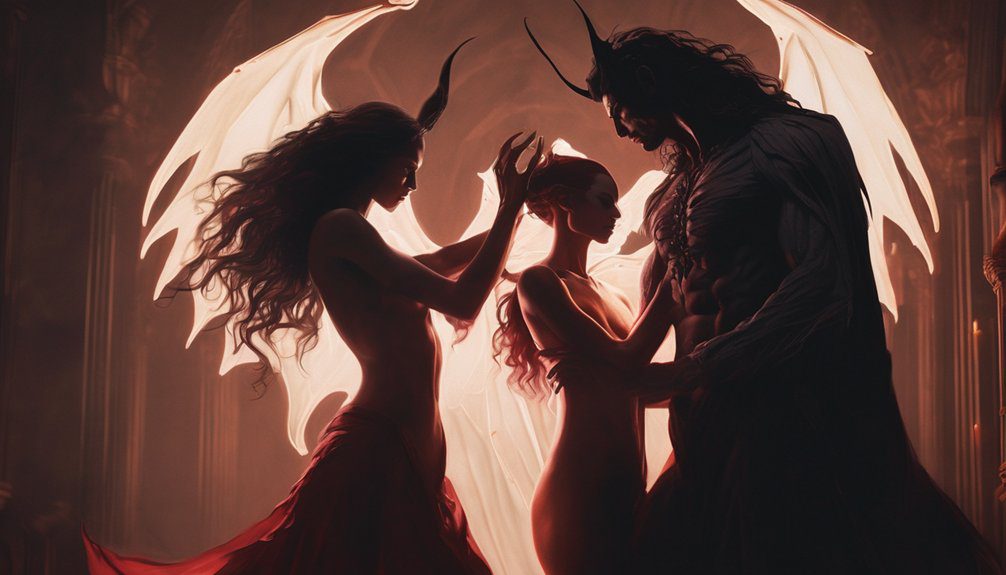
You’ll find that an incubus is traditionally a male demon believed to engage with individuals during sleep, while a succubus is its female counterpart. Both figures come from ancient folklore and symbolize fears, desires, and power dynamics related to sexuality. They’re described as seductive yet harmful, influencing victims’ physical and mental states. Beyond mythology, they represent deeper psychological themes and continue to appear in modern culture, reflecting evolving societal views. Exploring these meanings reveals more about their symbolic roles today.
Origins and Historical Context of Incubus and Succubus
Although the concepts of incubus and succubus are often associated with folklore and mythology, their origins trace back to ancient civilizations where they represented supernatural beings believed to interact with humans during sleep.
In medieval folklore, these entities reflected societal views on gender roles, portraying the incubus as a male demon and the succubus as a female counterpart.
These roles reinforced contemporary ideas about sexuality and power dynamics. Understanding this historical context helps you see how these figures evolved, influenced by cultural beliefs and fears, rather than existing solely as mythological creatures detached from human social structures.
Characteristics and Behaviors of These Demonic Entities
When examining the characteristics and behaviors of incubi and succubi, you’ll find that these entities are typically described as supernatural beings that engage with humans during sleep, often with a sexual nature.
They’re believed to exert demonic influences, affecting their victims’ physical and mental states through nocturnal encounters.
These beings often appear alluring, using charm to seduce individuals, while their interactions may lead to exhaustion or distress.
Understanding these behaviors helps you recognize how folklore portrays them as persistent, invasive forces during vulnerable hours, emphasizing their role in nocturnal disturbances linked to ancient beliefs.
Symbolism and Psychological Interpretations
Since incubi and succubi have appeared in folklore for centuries, their symbolism extends beyond mere supernatural tales to represent deeper psychological themes.
You can view these entities as psychological archetypes embodying human fears, desires, and internal conflicts. In dream symbolism, they often surface to reveal suppressed emotions or struggles with intimacy and control.
Understanding these figures helps you explore subconscious patterns and gain insight into personal freedom. By recognizing the symbolic nature of incubi and succubi, you empower yourself to confront hidden anxieties and embrace psychological growth, rather than feeling trapped by fear or misunderstanding.
Incubus and Succubus in Modern Culture and Media
The enduring presence of incubi and succubi in folklore has naturally influenced their portrayal in modern culture and media. You’ll find these mythical representations frequently adapted in films, literature, and video games, where they often embody themes of temptation, power, and fear.
Contemporary adaptations tend to explore their psychological and symbolic roles, moving beyond simple horror to examine human desires and vulnerabilities. By understanding these portrayals, you can appreciate how ancient myths evolve to reflect current societal values and individual freedoms.
This awareness helps you critically engage with the media you consume, recognizing deeper meanings behind these enduring figures.
Frequently Asked Questions
Can Incubus or Succubus Possession Be Treated Medically?
You can seek medical treatments and psychological interventions if you believe you’re affected. These approaches help you regain control and freedom from distressing experiences, focusing on your mental and emotional well-being rather than supernatural causes.
Are There Any Protective Rituals Against Incubi and Succubi?
Yes, you can use protective charms and spiritual cleansing rituals to guard yourself. These practices help you reclaim your freedom and energy, creating a shield that repels negative influences like incubi and succubi effectively.
Do Incubus and Succubus Myths Exist in Non-Western Cultures?
Yes, you’ll find incubus and succubus myths in Eastern interpretations too, showing diverse cultural variations. These stories reflect different beliefs but share themes, letting you explore freedom in understanding supernatural folklore worldwide.
Are There Any Famous Historical Figures Linked to Incubus or Succubus Encounters?
Yes, you’ll find historical accounts and literary references linking figures like King Solomon and Eleanor of Aquitaine to incubus or succubus encounters. These stories reveal how people once explained their fears and desires through such myths.
Can Dreams Involving Incubi or Succubi Predict Future Events?
You shouldn’t rely on dreams involving incubi or succubi as prophetic visions. Dream interpretation is personal, but these dreams more often reflect your subconscious fears, not accurate predictions about your future or destiny.