

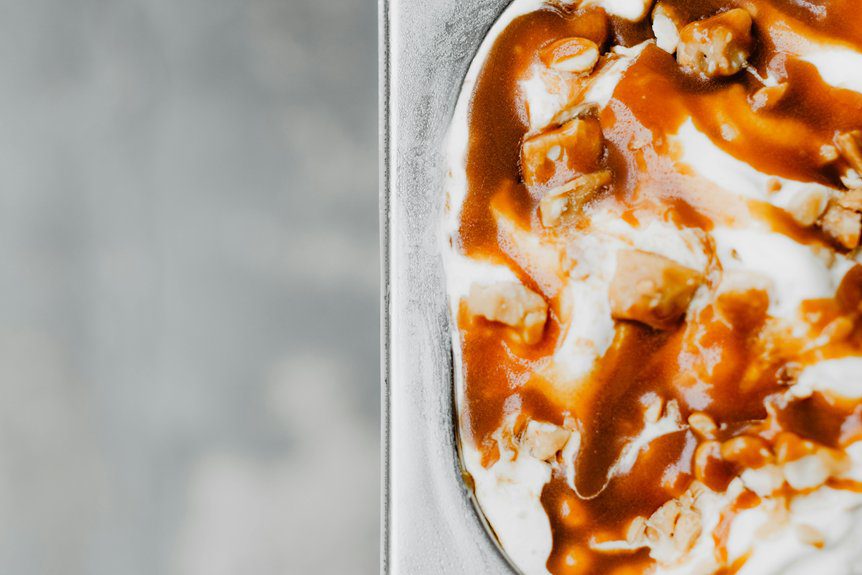
McDonald’s ice cream doesn’t have a standard expiration date but can spoil if not handled properly. It stays fresh for a few days when stored in an airtight container in your freezer’s coldest spot. Over time, exposure to air, moisture, or temperature changes can cause freezer burn, off smells, and texture loss, indicating spoilage. Consuming it quickly guarantees the best experience. Understanding these factors helps you keep your ice cream safe and enjoyable, as you’ll find out next.
Shelf Life of McDonald’s Ice Cream
McDonald’s ice cream is made fresh daily and is best enjoyed within a few days to maintain its ideal flavor and texture.
Although the pasteurized mix helps extend the shelf life, this ice cream remains perishable. When you store ice cream from McDonald’s properly in your freezer, it can last about two months, but the quality will gradually decline.
Leftovers from the machines should be discarded after 24 hours to avoid spoilage. Unlike store ice cream with clear expiration dates, McDonald’s ice cream doesn’t have a strict expire timeline, so consuming it fresh guarantees the best experience.
Factors Affecting Ice Cream Freshness
Several factors influence how long ice cream stays fresh and maintains its quality.
For McDonald’s ice cream, exposure to air and moisture can lead to freezer burn, which causes ice crystals to form on the surface. These ice crystals signal a loss of freshness and negatively affect the ice cream’s texture and flavor.
Temperature fluctuations also play a key role; keeping the ice cream consistently frozen prevents spoilage. Properly sealing the container limits air contact, preserving quality longer.
Understanding these factors helps you enjoy McDonald’s ice cream at its best before any decline in freshness occurs.
Signs Your McDonald’s Ice Cream Has Spoiled
If ice cream has been left out at room temperature for an extended period, you might notice changes that indicate spoilage.
Common signs your McDonald’s ice cream has gone bad include a gritty texture and an off smell. The surface of the ice may show ice crystals, which suggest freezer burn—this affects flavor and quality but doesn’t always mean it’s unsafe.
Additionally, color changes or a loss of the original creamy texture signal spoilage. When the flavor diminishes or tastes unusual, it’s a clear indication the ice cream has gone past its freshness.
Proper Storage Tips for McDonald’s Ice Cream
Although ice cream is best enjoyed fresh, proper storage can help preserve its quality if you have leftovers.
To keep your McDonald’s ice cream at its best, store it in an airtight container of ice cream and place it in the coldest part of your freezer.
Keep in mind, ice cream’s texture and flavor won’t last forever, so consume it within a few days.
Avoid refreezing melted ice cream, as this can ruin the texture.
If the cream has gone bad, discard it immediately.
These proper storage tips guarantee your frozen treat stays enjoyable and safe.
Comparing McDonald’s Ice to Other Fast-Food Ice Cream
When comparing McDonald’s ice cream to other fast-food options, you’ll notice differences in texture, flavor, and ingredient composition.
McDonald’s ice cream stands out for its creamy texture, often preferred over offerings from fast-food chains like Chick-fil-A and Sonic. The regular cleaning of McDonald’s machines helps maintain consistent quality, which impacts freshness and shelf life.
Unlike homemade ice cream, McDonald’s uses a mix of milk, cream, and additives, affecting its taste and longevity. If you have a sweet tooth, understanding these differences can help you choose the best fast-food ice cream based on quality and personal preference.
Frequently Asked Questions
Does Mcdonald’s Ice Cream Go Bad?
Yes, McDonald’s ice cream can go bad if you don’t follow proper ice cream storage guidelines.
Fast food frozen treats like this require consistent freezing to maintain quality control and consumer health. Pay attention to product labeling for storage instructions and expiration dates.
Improper storage can lead to spoilage, affecting food safety through bacterial growth or freezer burn. Always check for changes in texture, smell, or appearance before consuming to guarantee safe enjoyment.
Is It Okay to Eat 2 Year Old Ice Cream?
Eating two-year-old ice cream isn’t recommended due to taste deterioration and texture changes like freezer burn.
Even with good storage conditions, ice crystals and off flavors develop over time. While it mightn’t always pose immediate health risks, age indicators like a slimy texture or off smell suggest spoilage.
For food safety and ideal enjoyment, it’s better to avoid ice cream that old, as quality and safety both decline greatly.
Can You Eat Ice Cream 2 Years Out of Date?
You shouldn’t eat ice cream that’s two years out of date.
Over time, ice cream storage issues like freezer burn cause quality degradation and noticeable taste differences. Expiration indicators include off smells or icy texture.
Beyond quality loss, food safety becomes a concern, as harmful bacteria can grow, posing health risks.
For your safety and enjoyment, it’s best to discard ice cream well before it reaches this extended period past its expiration date.
How Long Is Ice Cream Good After the Expiration Date?
Ice cream shelf life extends about two to three months past the expiration date if you maintain proper frozen dessert storage at zero degrees Fahrenheit.
However, flavor degradation and ice cream texture changes often occur after six weeks.
Follow food safety guidelines by checking for signs of spoilage like off-smells or ice crystals.
Consuming expired food carries risks, so always assess these cues before eating to avoid potential health issues.
