

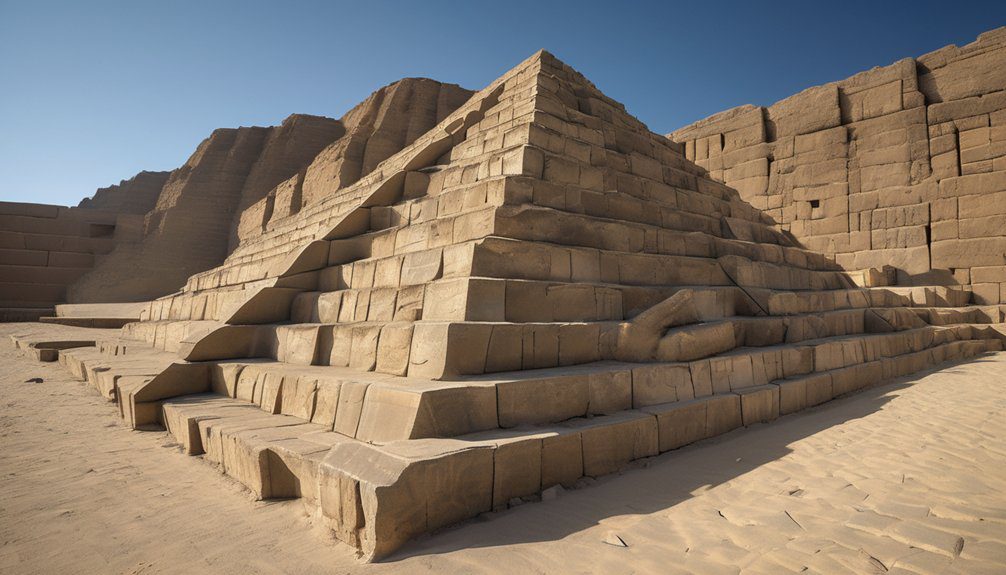
You’ll find ancient engineering feats like the Great Pyramid of Giza astonishing due to its precise alignment with cardinal points and expertly cut limestone blocks. Machu Picchu’s stone structures fit perfectly without mortar, designed for earthquake resistance. Roman aqueducts showcase advanced water flow techniques using gravity and durable materials. Stonehenge’s circular symmetry aligns with solstices, reflecting careful planning and cultural significance. These enduring monuments demonstrate advanced knowledge and craftsmanship that continue to challenge modern understanding, revealing more as you explore further.
The Precision of the Great Pyramid of Giza
The Great Pyramid of Giza stands as one of the most precise examples of ancient engineering.
You’ll notice its pyramid alignment is remarkably accurate, closely matching the cardinal points with minimal deviation. This precision suggests advanced knowledge of astronomy and geography.
The construction techniques used were equally sophisticated, involving carefully cut limestone blocks placed with exact measurements to form a stable structure. These methods allowed the builders to achieve both durability and alignment, vital for the pyramid’s intended function.
Understanding these elements shows how ancient engineers combined skill and observation to create a monument that endures through time.
The Engineering Marvel of Machu Picchu
Machu Picchu showcases remarkable engineering adapted to its mountainous environment, demonstrating the ingenuity of the Inca civilization.
You’ll notice how Inca Architecture blends with Sacred Geography, reflecting a deep connection to nature and spiritual beliefs.
Key engineering features include:
- Terraced slopes preventing erosion and supporting agriculture.
- Precisely cut stones fitted without mortar, ensuring earthquake resistance.
- Complex drainage systems managing heavy rainfall efficiently.
- Strategic alignment with astronomical events reinforcing its sacred significance.
The Aqueduct Systems of Ancient Rome
Ancient Rome built eleven major aqueducts that supplied water to its growing population, showcasing impressive engineering skills.
You can appreciate how these aqueducts relied on advanced water transportation methods, moving water over long distances using gravity alone. Their engineering techniques included precise gradients and durable materials, allowing for steady flow and minimal maintenance.
As you explore these systems, you’ll see how Rome’s engineers combined practicality with innovation, ensuring cities had reliable water access. This infrastructure not only supported daily life but also symbolized control and freedom, enabling citizens to thrive independently through effective resource management.
The Mysterious Stone Circles of Stonehenge
How did builders manage to transport and arrange massive stones into the precise circular patterns found at Stonehenge? The site’s Stone Circle Alignment reveals a sophisticated understanding of astronomy and geometry.
You can appreciate four key aspects:
- Stones were likely moved using sledges and rollers over long distances.
- Exact placement required detailed planning to achieve circular symmetry.
- Alignments correspond with solstices, indicating astronomical purposes.
- The Mystical Significance suggests ritual or ceremonial functions tied to natural cycles.
This combination of engineering skill and cultural meaning continues to intrigue scientists and freedom-seekers alike.
