

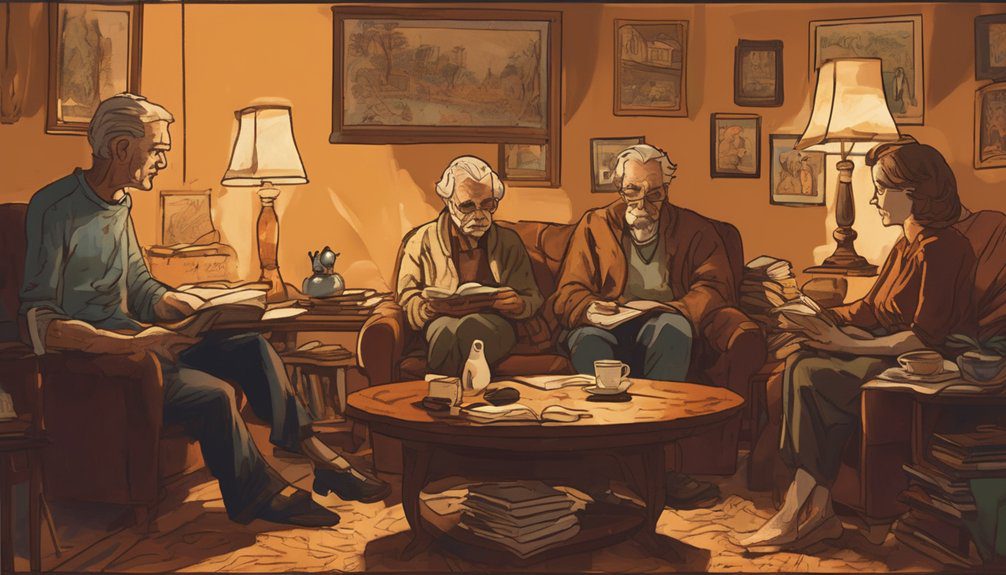
In The Man From Earth’s ending, you discover John Oldman’s claim of immortality, challenging your concepts of time and existence. The revelation prompts you to reconsider faith alongside scientific skepticism, as John’s story blends elements of both belief and reason. His eternal life raises questions about personal growth, isolation, and societal change over centuries. This conclusion encourages you to explore deeper themes surrounding freedom and the nature of reality beyond the immediate narrative.
The Significance of John Oldman’s Immortality
Although John Oldman’s immortality might initially seem like a simple plot device, it serves a deeper purpose in the narrative.
You explore immortality implications that challenge your understanding of time and human experience. By viewing history through John’s eyes, you gain a unique historical perspective that spans centuries, highlighting how societies evolve yet repeat patterns.
This perspective encourages you to contemplate freedom beyond your lifespan, questioning how knowledge and personal growth accumulate over time.
John’s endless life pushes you to reflect on the consequences of eternal existence and the burdens it places on your sense of identity and liberty.
Interpreting the Final Revelation
When the final revelation unfolds in The Man From Earth, it challenges you to reconsider everything you’ve learned about John Oldman.
The final moments prompt you to question his true nature and intentions, leaving a lasting impact on the audience reaction.
You’ll want to focus on:
- How the revelation redefines John’s identity and the story’s context.
- The subtle clues leading up to the reveal, encouraging you to piece together the truth.
- Your own interpretation of freedom, shaped by John’s extraordinary existence.
This revelation invites you to rethink reality and personal belief systems.
Themes of Faith and Science in the Ending
Since the ending of The Man From Earth presents a character who’s lived for millennia, it naturally raises questions about the relationship between faith and science.
You encounter a clear exploration of faith versus reason, as the character’s story challenges traditional beliefs while inviting scientific skepticism.
The film doesn’t dismiss either side; instead, it highlights the tension between science and belief, encouraging you to contemplate how both can coexist.
Ultimately, the ending prompts you to reflect on your own views, recognizing that freedom in thought comes from balancing faith with reason and embracing uncertainty.
Frequently Asked Questions
Who Is John Oldman Based on in Real History?
John Oldman isn’t based on specific historical figures but embodies timeless wisdom and philosophical implications. You’ll find his story challenges your views on freedom, history, and humanity’s endless search for meaning across ages.
What Inspired the Film’s Minimalist Setting?
You’ll find the film’s minimalist design inspired by a desire to emphasize narrative focus, giving you freedom to engage deeply with the story and characters without distractions, making every conversation and idea truly impactful.
Are the Characters’ Professions Significant to the Story?
Yes, you’ll see character implications tied to profession symbolism; each role challenges conventional thinking, inviting you to question norms and embrace intellectual freedom, making their careers essential to the story’s deeper philosophical exploration.
Was the Movie’s Ending Planned From the Start?
You’ll find the ending wasn’t rigidly planned but embraced planned ambiguity, allowing the narrative structure to breathe. This freedom invites you to interpret the story’s conclusion in your own liberating way, sparking endless possibilities.
How Does the Film Explore Human Relationships?
You’ll see how friendship dynamics challenge your beliefs, sparking existential questions about life and freedom. The film pushes you to value authentic connections while questioning the limits society places on your personal journey and self-discovery.
