

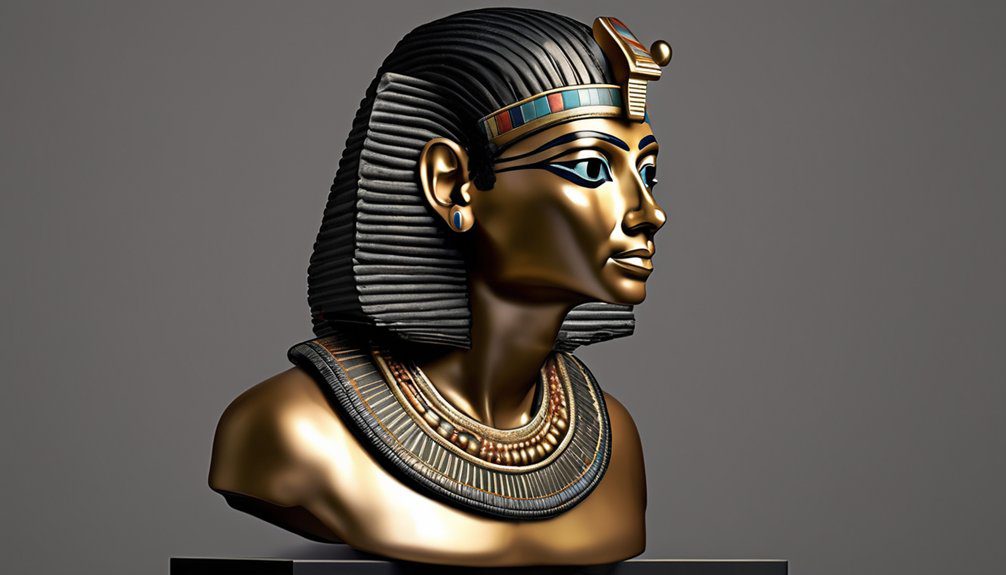
You can understand what ancient Egyptians looked like by examining mummified remains, which reveal facial structures, hair types, and skin textures. Artwork like paintings and reliefs show varied skin tones, hairstyles, and adornments that reflect social status. Genetic studies confirm their population was diverse, blending Sub-Saharan African, Middle Eastern, and Mediterranean traits. Personal appearance conveyed identity and rank through cosmetics and jewelry. Exploring these sources offers a clear yet complex picture of their true appearance.
Archaeological Discoveries Revealing Physical Features
Although ancient Egyptians left no photographs behind, archaeological discoveries have given us valuable insights into their physical features. You can learn about their appearance through mummification techniques, which preserved bodies in remarkable detail. These methods reveal facial structures, hair types, and even skin textures.
Additionally, ancient artwork plays a significant role in understanding their looks. Paintings, sculptures, and reliefs depict varied skin tones, hairstyles, and clothing styles, offering clues about individual and regional differences.
Scientific Studies on Skin Tone and Genetics
While ancient artwork and mummified remains offer valuable clues about how Egyptians looked, scientific studies on skin tone and genetics provide a more precise understanding of their biological characteristics.
You’ll find that:
- Genetic diversity in ancient Egypt was significant, reflecting interactions with neighboring regions.
- Skin pigmentation varied among individuals, influenced by both environment and ancestry.
- Modern DNA analysis reveals a complex mixture of Sub-Saharan African, Middle Eastern, and Mediterranean traits.
These findings challenge simplified views and highlight the dynamic nature of Egypt’s population, helping you appreciate the true complexity behind their appearance.
Hairstyles and Personal Adornments in Ancient Egypt
Since personal appearance played a significant role in ancient Egyptian culture, hairstyles and adornments were carefully chosen to convey social status, age, and identity.
You’d notice that both men and women often wore wigs, which varied in style depending on their social rank.
Ancient cosmetics enhanced their look, with kohl-lined eyes being especially popular.
Jewelry significance went beyond decoration; pieces symbolized power and protection. Necklaces, bracelets, and earrings made from gold and precious stones were common among the elite.
These choices reflected a society where appearance communicated more than beauty—it expressed one’s place and role within the community.
Frequently Asked Questions
What Clothing Did Ancient Egyptians Typically Wear?
You’d typically wear linen tunics or cotton garments in ancient Egypt, choosing lightweight fabrics that let your skin breathe freely under the hot sun. These clothes gave you comfort and ease to move without restriction.
How Did Ancient Egyptians Maintain Their Hygiene?
You’d follow ancient Egyptians’ bathing rituals, using oils and natron for cleansing. They’d also practice dental care by chewing on sticks and using powders, keeping freedom in hygiene choices just like you do today.
What Types of Jewelry Were Popular in Ancient Egypt?
You’ll find ancient Egyptians loved gold adornments like necklaces, bracelets, and rings. These pieces held symbolic significance, representing protection, power, and divine connection, letting you embrace freedom through their meaningful, beautiful designs.
Did Ancient Egyptians Use Makeup, and What Was It Made Of?
Yes, you’d wear makeup made from natural ingredients like malachite and kohl. These cosmetic applications protected your skin, warded off evil, and let you express freedom through vibrant, meaningful styles every day.
How Did Ancient Egyptian Fashion Differ Between Social Classes?
You’ll notice ancient Egyptian fashion materials varied by class; commoners wore simple linen, while royals flaunted luxurious fabrics and intricate royal attire, reflecting their status and freedom to express power through clothing choices.