

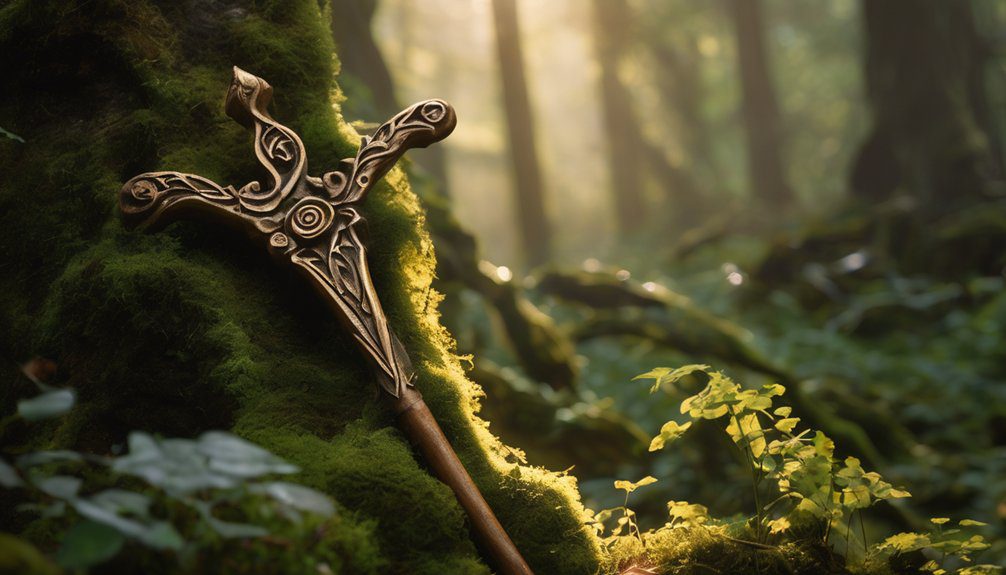
You can trace the magic wand’s origins back to ancient rituals where it served as a tool connecting humans to divine and natural forces. Early societies used wands in ceremonies to channel spiritual energy, symbolizing authority, protection, and transformation. Mythologies from Egypt to Celtic lands portray wands as instruments of power and guidance. Over time, their significance expanded into literature and modern culture, evolving from divine tools to symbols of personal empowerment. Exploring their history reveals much more about their enduring role.
Ancient Rituals and Symbolism of Wands
Although wands have evolved in form and function over centuries, their origins lie deeply embedded in ancient rituals and symbolism.
You’ll find that early societies used wands as tools to channel spiritual energy, often during ceremonies meant to connect with higher powers or nature.
Wand symbolism represented authority, transformation, and protection, serving as a physical link between the mortal and the divine.
Magic Wands in Mythology and Folklore
When you explore mythology and folklore, you quickly see that magic wands appear as powerful symbols across many cultures. These objects often represent authority, transformation, or connection to the divine, reflecting their mythical origins.
Wand symbolism highlights the ability to channel unseen forces, granting users control or insight beyond ordinary means. From ancient Egyptian priests to Celtic druids, wands served as tools of power and communication with spiritual domains.
Understanding these cultural contexts helps you appreciate how wands embody freedom to influence and shape reality, a concept that resonates across diverse traditions and stories worldwide.
The Role of Wands in Religious Ceremonies
Religious ceremonies often incorporate wands as significant ritual tools that facilitate spiritual connection and symbolic actions.
You’ll find wands used as sacred symbols, representing authority, purity, or divine power during these rites. As ceremonial tools, they help direct energy or blessings, marking changes or invoking protection. Their presence encourages focus and intention, guiding participants through the ritual process.
Though designs vary across cultures, the wand’s role remains consistent: it acts as a tangible link between the earthly and the spiritual domains. Understanding this use highlights the wand’s enduring importance beyond mere myth or folklore.
Evolution of the Magic Wand in Literature
As literature developed across centuries, the magic wand transformed from a simple emblem into a complex symbol with varied meanings and uses.
You’ll notice that wand symbolism evolved alongside cultural shifts, reflecting changing ideas about power, control, and freedom. Early texts often portrayed wands as tools of divine authority, but later works expanded their role to include personal transformation and liberation.
This wand evolution illustrates how authors used the wand as a metaphor to explore human potential and societal constraints. Understanding this progression helps you appreciate the wand’s layered significance in literary history, beyond mere magical effects.
Cultural Variations and Modern Interpretations
Although the magic wand appears in many cultures, its meanings and uses differ greatly depending on historical and social contexts.
You’ll find its cultural significance varies, from a symbol of authority in ancient Egypt to a tool for spiritual guidance in Celtic traditions.
Today, modern adaptations reflect changing values, often portraying wands as instruments of personal empowerment rather than mere magical devices.
As you explore these variations, you’ll see how the wand’s role evolves to meet contemporary ideas about freedom and self-expression, highlighting its enduring relevance across diverse societies and eras.
Frequently Asked Questions
What Materials Were Traditionally Used to Make Magic Wands?
You’d find magic wands traditionally crafted from willow wood or the elder tree, materials known for their natural power. Choosing these woods lets you tap into freedom and strength, connecting deeply with nature’s untamed energy.
How Did the Design of Wands Differ Across Ancient Civilizations?
You’ll notice wand symbolism varied widely—Egyptians used ornate designs for divine power, while Celts crafted simpler, nature-inspired wands for ancient rituals. Each design reflected unique beliefs, letting you connect freely with your spiritual path.
Were Magic Wands Believed to Have Healing Powers?
Yes, you’d find magic wands central to healing rituals, reflecting ancient beliefs that they channeled energy or divine power. They symbolized freedom from illness, letting you reclaim control over your body and spirit.
Did Historical Figures Actually Use Magic Wands?
You won’t find strong historical evidence that figures used magic wands as tools, but wand symbolism represented power and authority. Embrace your freedom by seeing wands as symbols, not just mystical objects.
How Did the Concept of Wands Influence Modern Magic Tricks?
You’ll see how wands shaped stage performance by adding flair and focus, letting you master illusion techniques that captivate audiences. They give you freedom to create mystery and control every magical moment with style.