

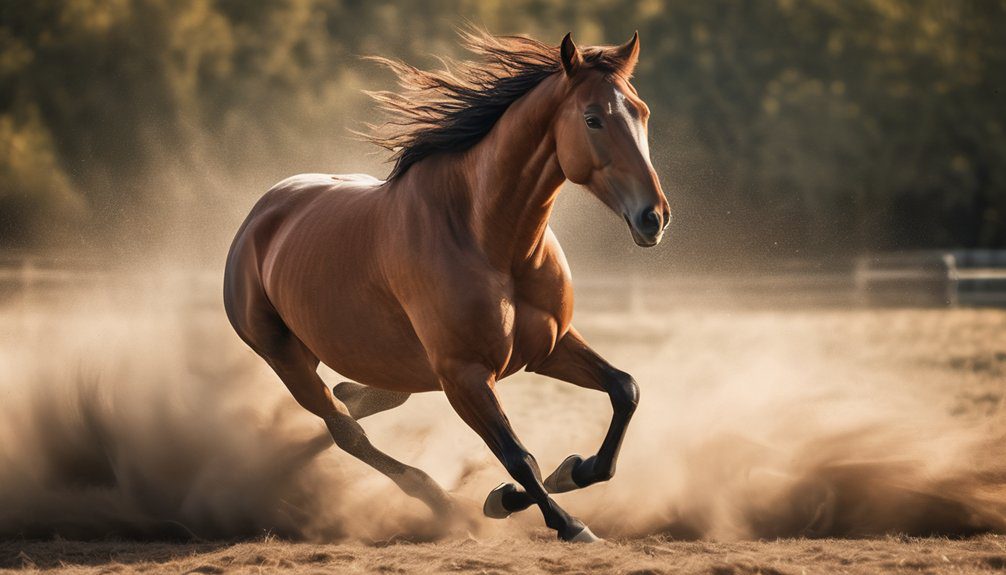
You might think a horse produces more power, but it can sustain about one horsepower continuously. This figure originated when James Watt created “horsepower” to compare steam engines with horses’ work output. Although horses can briefly generate up to 15 horsepower in short bursts, their steady output remains closer to one. Factors like breed, training, and health influence this number. Understanding this helps you appreciate horsepower’s role in measuring mechanical engines, with more details ahead as you explore further.
The Origin of the Term Horsepower
Although the term “horsepower” is commonly used today to measure engine power, it originated in the 18th century when engineer James Watt sought a way to compare the output of steam engines to the work done by horses.
You can appreciate how his idea bridged industrial innovation and equine strength to create a practical standard. Understanding horsepower history helps you grasp why this measurement remains relevant.
Watt observed horses’ ability to perform continuous work and translated that into units reflecting mechanical power. This connection between horses and machines still defines how you evaluate engine performance today.
Calculating the Power Output of a Horse
Determining the power output of a horse involves measuring the amount of work it can perform over time. You assess power measurement by calculating the force a horse exerts and the speed at which it moves.
Equine biology plays a key role, as muscle composition and energy conversion affect strength and endurance. Typically, researchers measure how much weight a horse can pull or how fast it can run while maintaining effort.
Understanding these factors gives you a reliable estimate of a horse’s true power output, distinct from the standardized “horsepower” unit used in machinery.
Factors Affecting a Horse’s Strength
Understanding the power output of a horse gives you a foundation to explore what influences its strength. Several factors shape how much force a horse can exert.
Horse breed differences play a significant role; draft horses typically possess greater muscle mass and endurance than lighter breeds, affecting their overall strength.
Additionally, training impact can’t be overlooked. Regular, targeted exercise enhances muscle development, cardiovascular capacity, and stamina, enabling a horse to perform tasks more efficiently.
Nutrition, health, and age also contribute, but breed and training stand out as primary determinants of a horse’s physical capabilities in various activities.
Comparing Horsepower to Modern Engines
The concept of horsepower originated as a way to compare the work output of horses to that of steam engines.
When you consider engine performance today, horsepower conversion helps you understand how much power modern engines produce relative to a single horse’s effort.
While a typical horse generates about 15 horsepower in short bursts, modern engines can sustain much higher power levels consistently.
This comparison lets you appreciate the evolution from biological muscle to mechanical force, highlighting how horsepower remains a useful metric despite advances in technology and engineering precision.
You can use this knowledge to better evaluate engine capabilities.
Frequently Asked Questions
Can Horses Sustain Their Peak Horsepower Over Long Periods?
No, horses can’t sustain their peak horsepower over long periods. You’ll find their sustained power relies on endurance capacity, allowing steady effort rather than bursts. Embrace this balance to truly appreciate their natural freedom and strength.
How Does a Horse’s Breed Affect Its Horsepower?
You’ll find that breed characteristics directly influence a horse’s horsepower, as performance metrics vary widely. Some breeds excel in speed and power, while others offer stamina and endurance, letting you choose freedom based on your riding goals.
Is Horsepower Measured the Same Way for All Animals?
No, horsepower definitions vary with animal comparisons; you can’t measure all animals the same way. Each species’ unique traits affect calculations, so you should embrace this freedom when comparing their power without strict, uniform standards.
Can a Horse’s Horsepower Increase With Training?
Yes, your horse’s horsepower can increase with a solid training regimen. Consistent work boosts muscle development and stamina, allowing your horse to perform stronger and freer, releasing its full natural power and spirit.
How Does Age Impact a Horse’s Horsepower?
You’ll notice young horses pack more horsepower thanks to their energy and strength, but aging effects naturally slow them down. Embrace their evolving power—it’s part of their freedom to grow and adapt over time.
