

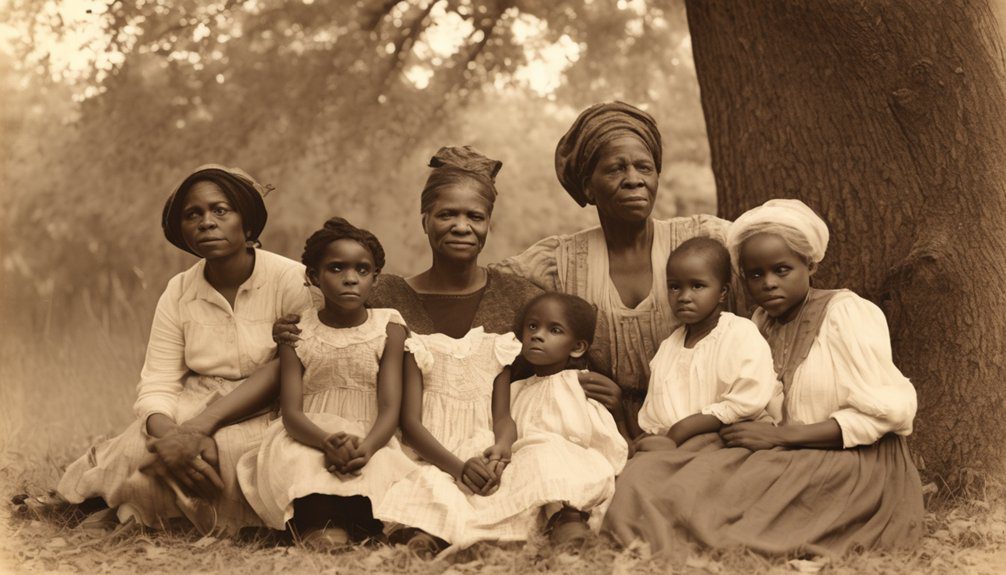
Harriet Tubman didn’t have biological children, but her family played a vital role in her life and work. Married twice—to John Tubman and later Nelson Davis—she cared deeply for her nieces and nephews. Her siblings shared the hardships of slavery, offering both emotional support and practical help in escape efforts. These strong family ties shaped her resilience and dedication to freedom. Explore her family’s influence further to understand the roots of her lifelong commitment.
Early Life and Family Background of Harriet Tubman
Harriet Tubman was born into slavery around 1822 in Dorchester County, Maryland. Your understanding of her childhood experiences reveals the harsh realities she faced from an early age.
Family dynamics in her enslaved community were complex, shaped by forced separations and the constant threat of sale. Despite these challenges, Harriet’s strong bonds with relatives provided some support and resilience.
These early experiences influenced her determination to seek freedom, not only for herself but for others. Recognizing her background helps you appreciate the foundation of courage and commitment she developed during her formative years under oppressive conditions.
Harriet Tubman’s Marriage and Children
Although her life was dominated by her work in the Underground Railroad, Tubman also experienced important personal relationships, including marriage.
She married John Tubman, a free Black man, around 1844. This marriage provided her with legal protection and a sense of stability amid the dangers of slavery.
Later, she married Nelson Davis, a Union Army soldier, in 1869 after the Civil War.
Harriet Tubman didn’t have biological children, but she cared deeply for her nieces and nephews, often acting as a guardian.
Understanding these marriage details and children names helps you grasp her personal life alongside her freedom efforts.
The Role of Harriet Tubman’s Siblings
While much attention is given to Tubman’s individual achievements, her siblings played a significant role in shaping her life and motivations. Understanding sibling dynamics and family support helps you appreciate her journey toward freedom.
Her siblings:
- Shared the hardships of slavery, fostering a collective resilience.
- Provided emotional encouragement, reinforcing her determination.
- Acted as essential links in escape plans, offering practical assistance.
These family ties strengthened Tubman’s resolve and informed her actions. Recognizing her siblings’ influence reveals how family support contributed to her leadership and commitment to liberation.
Their roles were integral, not peripheral, in her life story.
Legacy Through Her Extended Family
Because Tubman’s impact extended beyond her immediate family, examining her extended family offers valuable insight into how her legacy lived on.
Her family connections spanned generations, with many relatives continuing to embody her spirit of resilience and pursuit of freedom. These connections helped preserve her historical impact, as descendants shared stories and upheld her commitment to justice.
Through reunions and community involvement, Tubman’s extended family maintained awareness of her contributions. By understanding these family ties, you see how her legacy persisted not only in history books but also in the ongoing efforts of those connected to her bloodline.
How Harriet Tubman’s Family Influenced Her Work
Since Harriet Tubman grew up in a close-knit family that faced the hardships of slavery together, her relatives played a significant role in shaping her dedication to freedom and justice.
You can see how her family values and resilience traits influenced her work in these ways:
- They taught her the importance of loyalty and protection, which fueled her commitment to helping others escape slavery.
- Their shared experiences built her strength to endure extreme dangers during missions.
- Their encouragement reinforced her belief in collective action for liberation.
Understanding her family’s impact helps you appreciate how deeply Tubman’s resolve was rooted in these foundational influences.
Frequently Asked Questions
What Inspired Harriet Tubman to Become a Conductor on the Underground Railroad?
You’ll find Harriet Tubman’s freedom struggle inspired her to become a conductor on the Underground Railroad. She’s one of the most inspirational figures, risking everything to lead others to liberation and showing you courage in the fight for freedom.
How Did Harriet Tubman Escape Slavery Herself?
You’ll admire her escape strategy—navigating harsh terrain and using the North Star to guide her. Her personal journey was fueled by courage and hope, showing you that freedom demands bold, unwavering determination.
What Were Harriet Tubman’s Major Accomplishments After the Civil War?
After the Civil War, you’ll admire how Harriet Tubman championed civil rights and fought passionately for women’s suffrage. She dedicated her life to freedom, inspiring generations to pursue justice and equality fearlessly.
Did Harriet Tubman Write Any Books or Memoirs?
Harriet Tubman didn’t write books herself, but her story appears in various Tubman writings. Understanding the historical context helps you appreciate her courage and relentless fight for freedom that inspired many.
How Is Harriet Tubman Commemorated in Modern Times?
You’ll find Harriet Tubman memorials celebrating her bravery, and Tubman historical sites preserving her legacy. Visiting these places inspires your fight for freedom, reminding you how one person’s courage can change history forever.
