

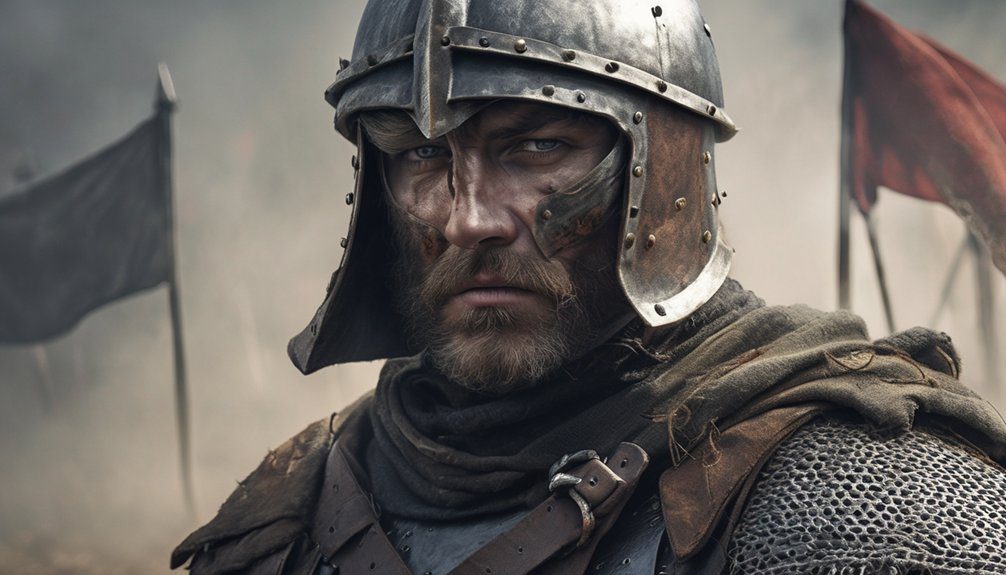
Jan Žižka was unstoppable because he combined innovative tactics with strong leadership, even after losing sight in one eye. He used war wagons as mobile fortresses, coordinated infantry, artillery, and cavalry efficiently, and adapted strategies to overcome his limited vision. His resilience and clear communication kept morale high and guaranteed control on the battlefield. These innovations changed medieval warfare and his success inspires military strategy studies for overcoming challenges through creativity and determination. Explore further to understand his full impact.
Early Life and Military Beginnings
Jan Žižka, born around 1360 in the Kingdom of Bohemia, began his military career amid the turbulent social and political climate of medieval Europe.
Your understanding of his journey starts with childhood influences that shaped his strong will and strategic thinking. Growing up in a noble family, he encountered early lessons about leadership and resilience.
Military mentorship played a vital role during his youth, as experienced commanders guided him through initial conflicts and tactics.
These foundations prepared you to appreciate how Žižka’s early experiences forged the discipline and insight necessary to lead and inspire those who sought freedom in a divided land.
Innovations in Hussite Warfare
Although traditional medieval armies relied heavily on cavalry charges and archers, Hussite forces under Žižka introduced groundbreaking tactics that transformed warfare in their era.
You’d recognize Hussite tactics for their clever use of war wagons, which formed mobile fortresses, allowing infantry to resist cavalry effectively. These wagons were arranged defensively and equipped with firearms, changing siege warfare dynamics by protecting troops while advancing.
Žižka’s forces also coordinated combined arms, mixing infantry, artillery, and cavalry efficiently. This innovation gave freedom fighters like you a powerful tool to challenge stronger enemies and defend their ideals with strategic ingenuity.
Overcoming Blindness on the Battlefield
Even after losing sight in one eye, Žižka continued to lead his troops with remarkable effectiveness.
You’d notice his tactical adaptations, which compensated for his reduced vision by relying on well-trained commanders and clear communication. His psychological resilience inspired those who fought for freedom, showing that physical setbacks don’t limit strategic capability.
Žižka adjusted formations and battle plans to suit his new perspective, ensuring he maintained control despite adversity. This ability to adapt under pressure allowed him to sustain momentum and morale, proving that determination combined with smart tactics can overcome significant challenges on the battlefield.
Legacy and Impact on Military History
While many military leaders have influenced warfare, Žižka’s strategies left a distinct mark on military history that you can still observe today.
His innovative use of mobile fortifications and combined arms tactics transformed traditional military strategy, emphasizing flexibility and resourcefulness.
Žižka’s ability to adapt to limited resources showcased the historical significance of unconventional approaches in warfare.
By studying his campaigns, you gain insight into how determination and strategic innovation can overcome numerical disadvantages.
His legacy continues to inspire military thinkers who value freedom and effective leadership in challenging circumstances, proving his enduring impact on the development of modern warfare concepts.
Frequently Asked Questions
What Were Jan ŽIžKa’s Personal Beliefs and Religious Views?
You’ll find Jan Žižka’s personal convictions deeply shaped by religious influences, driving him to fight for freedom and justice. He stood firmly against oppression, embodying unwavering faith and commitment to liberating people from tyranny.
Did ŽIžKa Have a Family or Descendants?
Žižka didn’t leave behind a direct lineage or notable familial connections. You won’t find descendants carrying his name, but his legacy inspires freedom fighters who value courage and resilience over bloodlines.
How Did ŽIžKa Die and Where Is He Buried?
You’ll find that Žižka’s death came from a disease during battle, yet his spirit remained unbroken. His burial site is secret, symbolizing freedom’s enduring mystery and inspiring those who fight for liberty.
What Weapons Did ŽIžKa Prefer Outside of Battlefield Innovations?
You’d find Žižka favored heavy flails and maces, reflecting his weaponry preferences rooted in close combat. Though famed for artillery tactics, he never abandoned his trusty melee weapons, proving freedom thrives through versatile, relentless fighting spirit.
Are There Any Myths or Legends About ŽIžKa’s Life?
You’ll find Žižka myths claiming he fought blind in one eye, making him unstoppable. Žižka legends celebrate his unyielding spirit, inspiring freedom lovers like you to resist oppression and fight for your own liberty boldly.
