

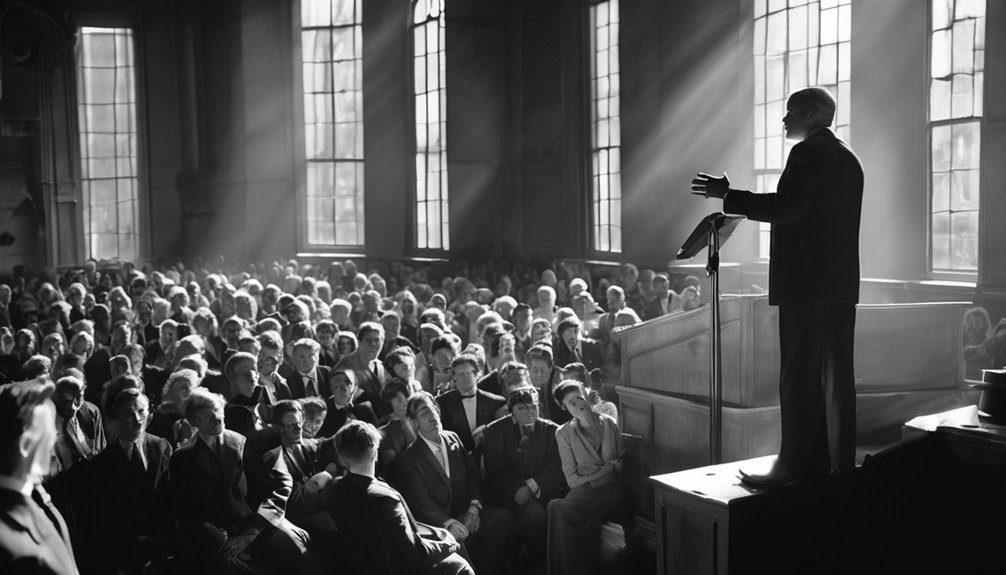
You’ll find that certain speeches have profoundly shaped history by inspiring change and uniting people. For example, Martin Luther King Jr.’s “I Have a Dream” emphasized equality and justice, while Winston Churchill’s call to “fight on the beaches” strengthened wartime resolve. John F. Kennedy urged public service, Nelson Mandela accepted sacrifice for freedom, and Franklin D. Roosevelt urged courage during crisis. Understanding these speeches offers insight into how words can mobilize movements and define eras. Explore further to uncover more about their impact.
Martin Luther King Jr.’s “I Have a Dream”
Martin Luther King Jr.’s “I Have a Dream” speech represents a pivotal moment in the history of civil rights in the United States.
You witness how King skillfully employs rhetorical devices like repetition, metaphor, and parallelism to emphasize his vision of equality. These techniques strengthen his message and inspire action among listeners who yearn for freedom.
Winston Churchill’s “We Shall Fight on the Beaches”
Although delivered during a time of great uncertainty, Winston Churchill’s “We Shall Fight on the Beaches” speech demonstrates his ability to rally a nation facing the threat of invasion.
Through Churchill’s rhetoric, he conveyed unwavering determination and inspired wartime resilience among listeners. You can sense his clear message: no matter the hardship, you must stand firm and defend freedom.
The speech outlined multiple fronts where resistance would continue, reinforcing a collective commitment to victory.
John F. Kennedy’s Inaugural Address
Following the steadfast determination expressed in Churchill’s wartime address, John F. Kennedy’s inaugural address solidified Kennedy’s vision for a new era.
You witness a call to action that defines freedom’s pursuit globally. The inaugural impact resonates through:
- Encouraging citizens to “ask not what your country can do for you.”
- Promoting global cooperation to combat tyranny and promote peace.
- Advocating for the defense of liberty against oppression.
- Inspiring a commitment to public service and sacrifice.
This speech frames freedom as an active responsibility.
You see how Kennedy’s vision shapes democratic ideals and international relations with clarity and purpose.
Nelson Mandela’s “I Am Prepared to Die”
When you examine Nelson Mandela’s “I Am Prepared to Die” speech, you encounter a powerful statement delivered during his 1964 trial.
Mandela boldly declared his commitment to political resistance against apartheid, accepting the consequences of his fight for equality. His words reveal a readiness to sacrifice personal freedom for the greater cause of justice.
This speech laid the foundation for Mandela’s legacy, inspiring generations seeking freedom worldwide. By standing firm, he emphasized that true change requires courage and persistence.
If you value liberty, Mandela’s message reminds you that resistance against oppression is essential to achieving lasting freedom.
Franklin D. Roosevelt’s “The Only Thing We Have to Fear Is Fear Itself”
Courage played a central role in Franklin D. Roosevelt’s inaugural address, emphasizing fear management and leadership resilience during the Great Depression.
He urged you to confront challenges without succumbing to panic. Roosevelt’s words provide a framework for maintaining freedom through:
- Recognizing fear as a barrier to progress
- Embracing leadership resilience to inspire collective action
- Practicing disciplined fear management to make informed decisions
- Fostering unity to overcome adversity
Frequently Asked Questions
How Were These Speeches Originally Recorded and Preserved?
You’d find these speeches originally captured through early audio preservation methods like wax cylinders or radio broadcasts, then carefully archived as essential historical documentation, ensuring their powerful messages continue inspiring freedom seekers like you across generations.
What Was the Public Reaction Immediately After Each Speech?
You’ll find public sentiment surged with hope and resolve, as the immediate impact stirred courage and unity. People felt empowered, ready to challenge oppression and claim their freedom, sparking movements that changed history forever.
Who Wrote or Helped Draft These Famous Speeches?
You’ll find that speech authorship often involves collaboration; leaders don’t always draft alone. The drafting process includes advisors and writers helping shape words that inspire freedom and ignite change, ensuring their message resonates powerfully with the people.
Were There Any Notable Interruptions or Challenges During the Speeches?
Yes, you’ll find that speech interruptions often tested speakers’ resolve, but their powerful words overcame challenges. Audience reactions ranged from cheers to tension, fueling the fight for freedom and inspiring everyone to stand united despite adversity.
How Have These Speeches Been Used in Education and Media Over Time?
You’ll find these speeches widely used in education and media for speech analysis, helping you grasp powerful rhetoric. Their educational impact inspires your fight for freedom, encouraging critical thinking and a deeper understanding of liberty’s value.
