

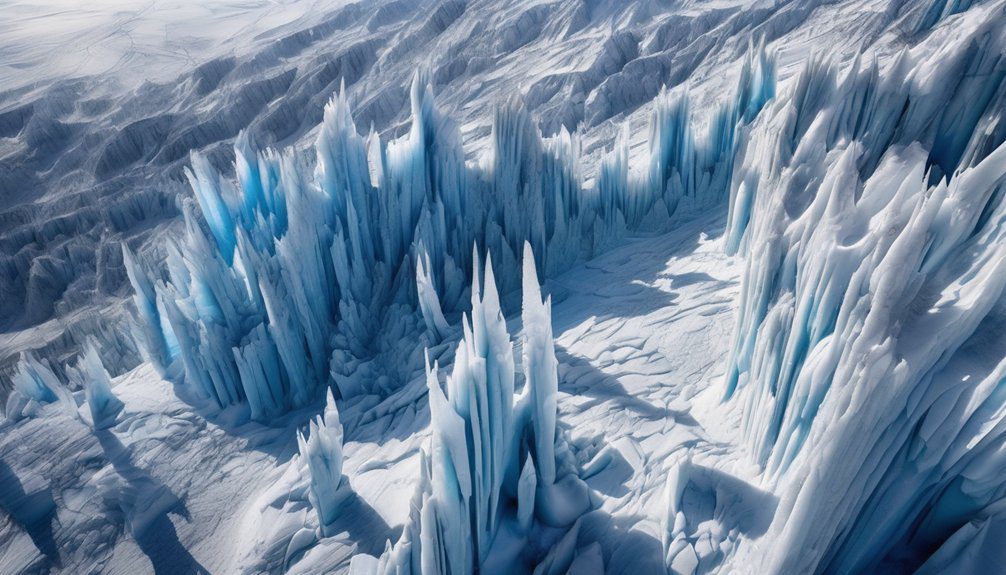
To build a frozen world with sturdy ice walls, start by planning your landscape and evaluating environmental factors like terrain and climate. Choose appropriate ice blocks and use proper tools such as ice saws and chisels while prioritizing safety. Apply realistic textures through layering and lighting to mimic natural ice effects. Incorporate interactive features and enhance the atmosphere using cool lighting and ambient sounds. By understanding these fundamentals, you’ll create a detailed and immersive frozen environment ready for exploration.
Planning Your Frozen Landscape
When planning your frozen landscape, you should begin by evaluating the available space and environmental conditions.
Assess the frozen terrain to determine its suitability for your project, noting any slopes, elevations, or obstacles that might affect construction.
Climate considerations are essential; understanding temperature fluctuations, wind patterns, and precipitation rates helps you anticipate challenges and maintain structural integrity.
Paying attention to these factors allows you to design a layout that harmonizes with natural conditions, ensuring durability and safety.
Taking a systematic approach to planning gives you the freedom to create a successful frozen world tailored to your environment’s unique demands.
Essential Materials and Tools for Ice Wall Construction
After evaluating your site and understanding the environmental factors, selecting the right materials and tools becomes a key step in constructing an ice wall that will stand firm.
Choose appropriate ice block types, such as clear, dense blocks for strength and opaque ones for insulation. Essential tools include ice saws, chisels, and heavy-duty gloves to handle materials safely.
Don’t overlook construction safety: wear protective gear and use secure scaffolding to prevent accidents. Proper selection and handling guarantee your ice wall maintains structural integrity and longevity, allowing you to create a frozen world that meets your vision without compromising safety or quality.
Techniques for Realistic Ice Textures and Effects
Creating realistic ice textures and effects requires careful manipulation of the ice surface and thoughtful use of lighting techniques.
Start by applying ice layering to build depth, simulating how real ice forms in translucent sheets with subtle variations. Use texture painting to add cracks, frost patterns, and imperfections that break uniformity and enhance authenticity.
Adjust your lighting to highlight these details, making the ice appear both solid and slightly transparent. Balancing reflections and refractions contributes to a convincing frozen appearance.
Designing Interactive Elements in Your Frozen World
Although visual details create the initial impression of a frozen environment, designing interactive elements transforms it into an engaging experience.
You should focus on incorporating interactive storytelling that allows users to explore and influence the frozen world freely. This approach increases user engagement by encouraging active participation rather than passive observation.
Implementing puzzles, dynamic dialogues, or environmental changes based on user actions can deepen immersion. Providing clear feedback for interactions helps maintain user interest and guides exploration.
Tips for Enhancing Atmosphere With Lighting and Sound
Incorporating interactive elements sets the stage for a more immersive frozen world, but the atmosphere truly comes alive through carefully designed lighting and sound.
You should focus on atmospheric lighting to simulate natural cold environments, using cool blues and subtle glows to enhance depth and realism.
Soundscapes creation is essential; integrate ambient noises like wind howling or ice cracking to immerse users fully.
Balancing light intensity and layering diverse sound elements helps maintain a consistent mood without overwhelming senses.
Frequently Asked Questions
How Long Does It Take for an Ice Wall to Fully Freeze?
It takes several hours for an ice wall to fully freeze, depending on the freezing process and temperature impact. You’ll want to control the cold environment carefully so your frozen world stands strong and lets you explore freely.
Can Ice Walls Be Built Outdoors in Warm Climates?
You can’t build ice walls outdoors in warm climates easily because ice wall feasibility depends on freezing temperatures. Without cold enough conditions, your ice walls won’t hold, so temperature considerations are essential for your frozen creation’s success.
What Safety Precautions Are Necessary During Ice Wall Construction?
You’ll need safety gear like helmets and gloves to protect yourself, and use proper construction techniques to guarantee stability. Stay alert and adaptable, so you can freely build while keeping risks under control and yourself safe.
How Do You Maintain Ice Walls to Prevent Melting?
You’ll maintain ice walls by applying ice wall insulation and using active cooling techniques like chilled air or water sprays. These methods help keep your frozen world solid and free from unwanted melting, giving you control.
Are There Eco-Friendly Alternatives to Traditional Ice Wall Materials?
You can choose sustainable materials like biodegradable options to build your ice walls. These let you create a frozen world responsibly, giving you freedom to innovate while protecting the environment without relying on traditional, wasteful methods.
