

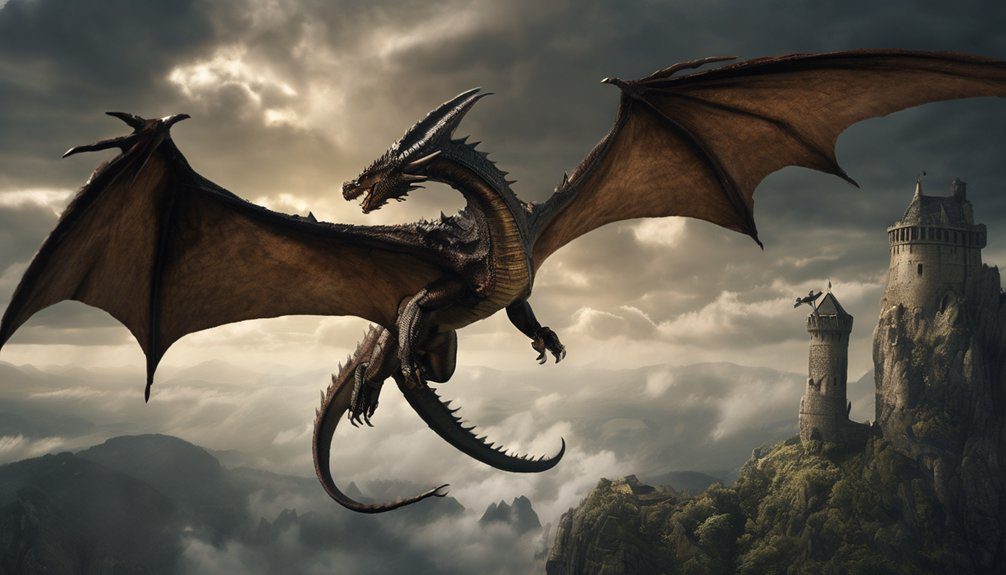
You’ll notice wyverns and dragons differ mainly in anatomy and symbolism. Wyverns have two legs plus wings that serve as front limbs, while dragons possess four legs and separate wings, often larger and bulkier. Mythologically, wyverns represent war or pestilence in European lore, whereas dragons symbolize power and wisdom across various cultures. These distinctions shape their contrasting roles in stories and media. Exploring these aspects further reveals how culture and history define each creature’s identity.
Origins and Mythological Backgrounds
Although wyverns and dragons are often grouped together in mythology, their origins and backgrounds differ markedly.
You’ll find that wyverns stem from medieval European folklore, often symbolizing pestilence or war, while dragons appear in a broader historical context, including Asian and Western traditions.
Their mythical origins reveal unique cultural meanings: dragons frequently embody power and wisdom, whereas wyverns are more limited in symbolic scope.
Understanding these differences helps you appreciate the varied roles they play in stories and art, reflecting distinct historical contexts rather than a single, unified mythological source.
Physical Characteristics and Anatomy
Wyverns and dragons differ markedly in their physical characteristics and anatomy, which helps to distinguish one from the other in artwork and literature.
When you observe them closely, these features stand out:
- Wing structure: Wyverns have two legs and two wings, while dragons have four legs and two wings, making their wing structure more complex.
- Body size: Dragons tend to be larger with more robust bodies, whereas wyverns are generally smaller and leaner.
- Limb arrangement: Wyverns use their wings as front limbs, contrasting with dragons that have separate forelimbs and wings.
Understanding these differences clarifies their unique identities.
Symbolism and Cultural Impact
Because they’ve distinct physical traits, wyverns and dragons also carry different symbolic meanings and cultural significance.
You’ll find dragons often symbolize power, wisdom, and protection in various cultural representations, reflecting their larger, more complex form with four legs and wings.
Wyverns, with two legs and wings, tend to embody more aggressive or chaotic aspects in mythical symbolism, sometimes representing war or pestilence.
Understanding these differences helps you appreciate how societies use these creatures to express values or fears.
These symbolic roles influence how freedom and authority are perceived through the lens of myth and legend.
Depictions in Modern Media and Fantasy
When exploring modern media and fantasy, you’ll notice that dragons often take center stage as powerful and majestic creatures, appearing in films, books, and video games as symbols of strength and wisdom.
Wyverns, though less common, show up in specific genres, especially fantasy games. You’ll find distinct portrayals that set them apart:
- Dragons often have four legs and wings, depicted in animated movies with noble or fearsome attributes.
- Wyverns usually have two legs and wings, frequently portrayed as swift, aggressive foes in fantasy games.
Both creatures symbolize freedom and elemental power, but their roles vary by medium.
Frequently Asked Questions
Can Wyverns Breathe Fire Like Dragons?
You can’t always count on wyverns having fire breathing capabilities like dragons do, since elemental differences often limit their powers. Embrace that freedom—each creature’s unique traits make them fascinating in their own right.
Are Wyverns Considered More Aggressive Than Dragons?
You’ll find wyverns show more aggressive behavior and stronger territorial instincts than dragons. If you value freedom, respect their space, as they fiercely defend it, unlike dragons who’re often more reserved and majestic.
Do Wyverns Have Magical Abilities Distinct From Dragons?
Wyverns generally lack the distinct magical abilities dragons boast, rooted in their mythological origins. If you crave freedom, you’ll appreciate how dragons’ powers symbolize limitless potential, while wyverns embody raw, untamed strength without magical flair.
Which Creatures Are More Popular in Video Games, Wyverns or Dragons?
You’ll find dragons more popular in video games because their game mechanics offer diverse abilities and rich character design. Wyverns appear too, but dragons give you greater freedom to explore epic, varied gameplay experiences.
Are Wyverns or Dragons Better Suited as Mythical Pets?
You’ll find dragons better suited as mythical pets because their adaptable pet temperament makes mythical creature care easier. They crave freedom yet bond deeply, giving you a balance between independence and companionship you’ll truly appreciate.