

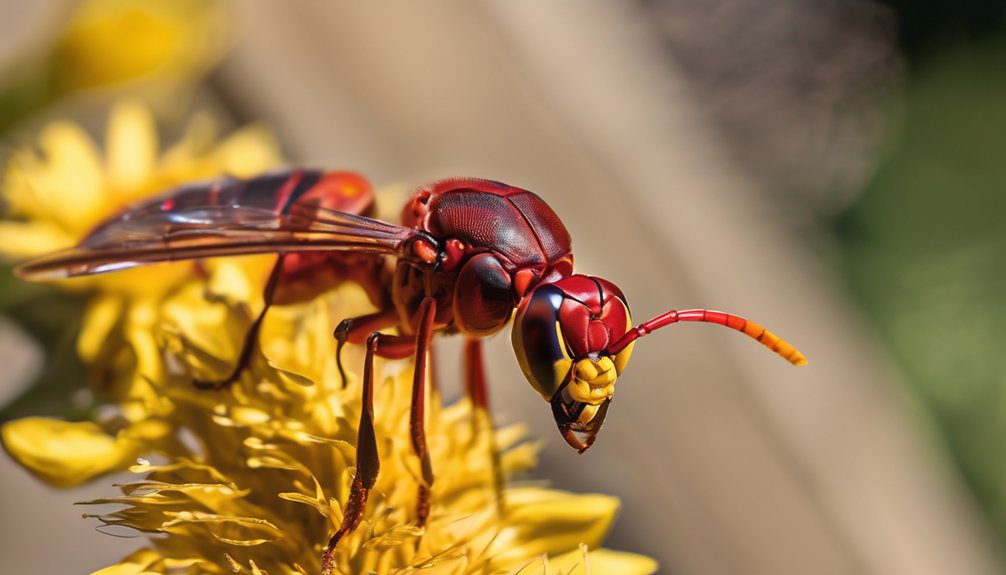
Red wasps attack mainly to defend their nests, perceiving you as a threat if you come too close. Their aggression increases during late summer and early fall when they protect their territory more fiercely. Environmental changes or disturbances near nests also trigger defensive behavior. You can reduce encounters by avoiding bright colors, strong scents, and sudden movements around wasp areas. Understanding these behaviors and triggers helps you stay safer and better prepared for managing wasp encounters ahead.
Understanding Red Wasp Behavior and Aggression
Although red wasps are often perceived as highly aggressive insects, their behavior typically revolves around defending their nests rather than unprovoked attacks.
You should understand that their nesting habits create a strong attachment to specific locations, which fuels their territorial instincts. When you approach too closely, they react to protect their colony, not out of random hostility.
Recognizing these patterns helps you respect their space and reduces conflict. Red wasps prioritize safeguarding their home, so their aggression is a measured response to threats.
Environmental Factors That Trigger Red Wasp Attacks
When environmental conditions change, red wasps may become more defensive and prone to attacks. Factors like nest location play a vital role; nests near human activity can increase wasps’ sensitivity to disturbances.
Seasonal changes also affect their behavior, especially in late summer and early fall when colonies prepare for winter. During these periods, red wasps defend their nests more aggressively to protect their future generations.
Understanding these triggers helps you recognize when wasps might be more hostile. Staying aware of how environmental shifts influence wasp activity can empower you to coexist with greater safety and freedom.
Practical Tips for Avoiding and Managing Red Wasp Stings
Understanding the environmental factors that increase red wasp aggression helps you anticipate risky situations and take appropriate actions.
For sting prevention, avoid wearing bright colors or strong scents that attract wasps. Keep food and trash covered when outdoors to reduce encounters.
If a wasp approaches, stay calm and move away slowly without sudden gestures.
In case of a sting, promptly remove the stinger, clean the area with soap and water, and apply a cold compress to reduce swelling.
For first aid, over-the-counter pain relievers and antihistamines can ease discomfort, but seek medical help if allergic reactions occur.
Frequently Asked Questions
How Long Do Red Wasps Live?
You’ll find the red wasp lifespan typically lasts a few weeks to a couple of months, but environmental factors like temperature and food availability can considerably impact how long they actually survive in the wild.
What Do Red Wasps Eat?
You’ll find that a red wasp diet mainly includes nectar and other insects. Their food sources keep them energized and help control pests, giving you a natural way to maintain freedom from unwanted bugs around you.
Are Red Wasps Beneficial to the Environment?
Yes, red wasps play a crucial role in ecological balance by controlling pests and contributing to pollination benefits. You’ll appreciate how they support freedom in nature’s cycle, keeping ecosystems healthy and thriving.
How Can You Identify a Red Wasp Nest?
You can identify a red wasp nest by checking common nest locations like tree branches or eaves. Their nests have a papery appearance, often grayish-brown, with layered hexagonal cells visible from the outside. Stay observant!
Do Red Wasps Have Natural Predators?
Yes, red wasps have natural predators like birds, spiders, and praying mantises. Knowing these natural wasp enemies helps you protect your freedom outdoors by keeping red wasp populations in check without harsh chemicals.