

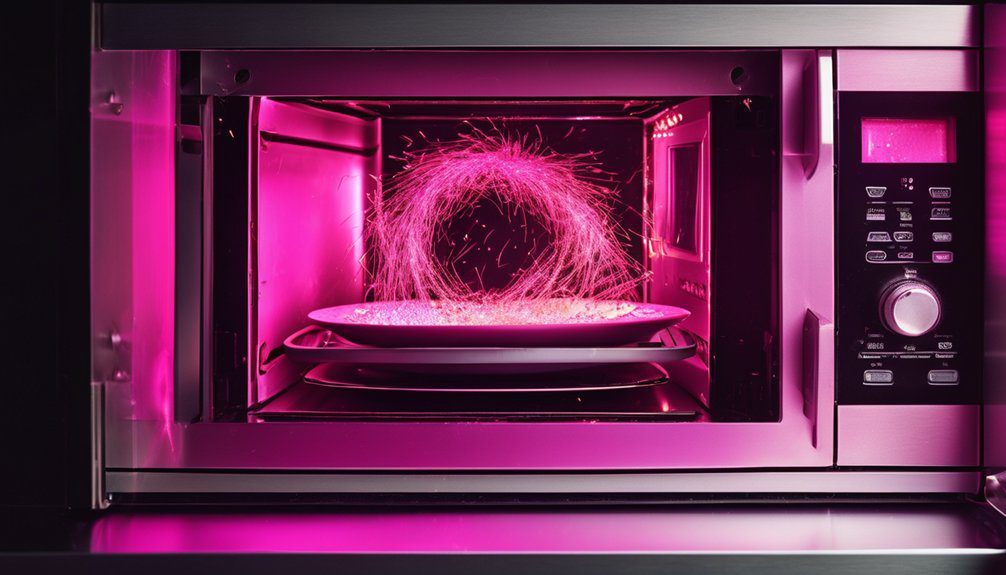
You see pink sparks in your microwave because certain food ingredients or metallic materials create unusual electrical discharges when exposed to microwave energy. These sparks often arise from interactions with metals, food packaging, or magnetron irregularities, signaling potential damage or safety risks. Such sparking can harm your microwave or cause fires if ignored. Proper use and maintenance reduce these risks, ensuring safe operation. Understanding the causes, dangers, and prevention methods will help you address the issue effectively.
What Causes Pink Sparks Inside a Microwave
Although pink sparks inside a microwave might seem unusual, they typically result from interactions between microwave energy and certain materials or food components.
When you notice these sparks, consider the food composition, as some ingredients can cause unusual electrical discharges.
Additionally, a magnetron malfunction can contribute to irregular sparking by producing uneven microwave radiation. This device generates the microwaves, so if it operates improperly, it may cause unexpected sparks, including pink ones.
Understanding these factors helps you identify whether the issue stems from what you’re heating or a mechanical problem, allowing you to address it safely and effectively.
Common Materials That Trigger Microwave Sparking
Certain materials commonly cause sparking when microwaved, and recognizing them can help you prevent potential hazards.
Metal containers often trigger sparks because microwaves reflect off their surfaces, creating electrical arcs.
Similarly, food packaging with metallic elements—like foil linings or metalized prints—can generate sparks if microwaved.
Even small metal twists or staples in packaging pose risks.
Avoid using any metal containers or food packaging not specifically labeled as microwave-safe.
Understanding these materials empowers you to use your microwave freely while minimizing the chance of unexpected sparks that might interfere with your appliance’s function or safety.
Safety Risks Associated With Microwave Sparks
When sparks occur inside a microwave, they can pose several safety risks that you should be aware of to protect both yourself and your appliance.
These sparks often signal electrical hazards that may damage the microwave’s internal components, potentially leading to malfunction or fire. Ignoring such incidents compromises microwave safety, increasing the chance of electric shock or short circuits.
Additionally, sparks can ignite flammable materials inside the microwave, creating a fire risk. Understanding these dangers helps you maintain a safe environment and guarantees your microwave operates reliably without unexpected failures caused by electrical hazards.
How to Prevent and Handle Microwave Sparking
To prevent microwave sparking, you need to regularly inspect and clean the interior, removing any food debris or grease that can cause arcing.
Consistent microwave maintenance guarantees the appliance operates safely and extends its lifespan. Avoid using metal containers or aluminum foil, as they reflect microwaves and create sparks.
If sparking occurs, stop the microwave immediately and unplug it to prevent damage. Check for damaged waveguides or interior coatings, and consult the user manual for specific cleaning instructions.
Prioritizing food safety and appliance care allows you to use your microwave freely without risk or interruption.
Frequently Asked Questions
Can Pink Sparks Damage My Microwave Permanently?
Yes, pink sparks can damage your microwave permanently. You should follow microwave maintenance tips and spark prevention methods to keep it safe. Taking control of these steps gives you the freedom to enjoy your microwave longer.
Are Certain Microwave Brands More Prone to Pink Sparks?
Certain microwave brands with poor microwave design might be more prone to pink sparks. You should choose brands known for reliability to avoid issues, ensuring your freedom from frequent repairs and the hassle of unexpected sparks.
Do Pink Sparks Affect the Taste of Food?
No, pink sparks don’t affect your food’s taste perception or food safety. You can keep enjoying your freedom to eat confidently, but if sparks persist, check your microwave to avoid any real safety concerns.
Is Pink Sparking Related to Microwave Frequency Settings?
No, pink sparking isn’t related to your microwave’s frequency settings. Spark formation usually comes from metal inside or surface damage. You’re free to use your microwave confidently—just avoid metal to prevent sparks.
Can Pink Sparks Indicate an Electrical Fault in My Home?
Yes, pink sparks can signal an electrical fault. To keep your freedom and microwave safety intact, don’t ignore them—schedule electrical inspections promptly and avoid risking damage or hazards in your home.