

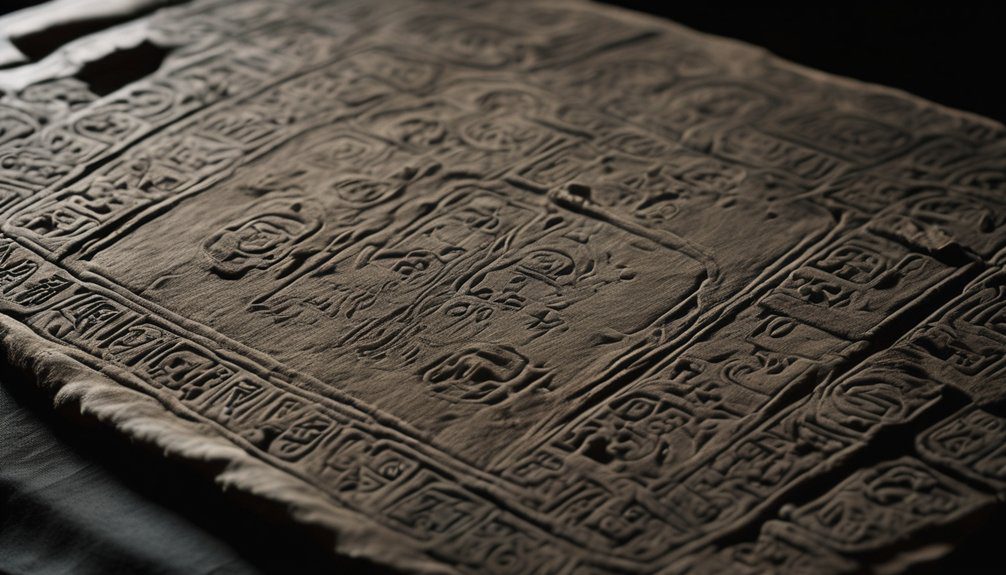
You might find that several ancient artefacts, like the Antikythera Mechanism, were underestimated in their complexity, acting as early analog computers for astronomy. The Baghdad Battery is debated as an ancient electrochemical cell, though its exact use remains unclear. The Phaistos Disc’s mysterious symbols challenge our understanding of ancient writing. The Vinland Map raises questions about Viking voyages to North America, but authenticity is disputed. Exploring these artefacts reveals much about past innovations and ongoing historical debates.
The Antikythera Mechanism: An Ancient Analog Computer
The Antikythera Mechanism stands as one of the most remarkable technological artifacts from the ancient world.
You’ll find it fascinating how this piece of ancient technology functioned as an analog computer, designed to perform complex astronomical calculations. Crafted over two millennia ago, it tracked celestial cycles and predicted events like eclipses.
Unlike modern digital devices, it relied on intricate gears and mechanical components. Understanding this mechanism challenges assumptions about ancient societies’ technological capabilities.
The Baghdad Battery: Myth or Ancient Electrochemical Cell?
How could ancient people have possibly created a device resembling a battery? The Baghdad Battery, discovered near Iraq, challenges our understanding of ancient technology.
Some believe it’s an early electrochemical cell, while others call it a myth. You should consider these points:
- It consists of a clay jar, copper cylinder, and iron rod.
- Electrochemical theories suggest it could generate a small electric current.
- There’s no clear evidence it powered anything.
- Scholars debate whether it was a practical device or a ritual object.
Understanding this artefact pushes you to rethink the limits of ancient innovation.
The Phaistos Disc: Decoding an Enigmatic Script
Exploring ancient artefacts often leads you to objects that challenge your understanding of early civilizations, much like the Baghdad Battery did with technology.
The Phaistos Disc, discovered in Crete, presents a mysterious case with its symbolic language imprinted in spiraled ancient scripts. You encounter symbols unlike any other known writing system, complicating attempts at decoding. Scholars debate its purpose, whether it’s a prayer, record, or game.
As you study the disc, you realize that revealing its meaning could offer unique insights into Minoan culture. Its undeciphered script remains a compelling puzzle in human history’s symbolic language.
The Vinland Map: A Controversial Glimpse of Viking Exploration
Why does the Vinland Map continue to spark debate among historians and collectors? This artifact allegedly shows Viking exploration of North America before Columbus. However, questions about its historical authenticity persist.
You’ll find that:
- The map’s ink and parchment have undergone conflicting analyses.
- Some experts see it as proof of early Viking presence.
- Others argue it’s a modern forgery intended to rewrite history.
- The lack of corroborating archaeological evidence complicates verification.
If you seek freedom to explore history, understanding these debates helps you appreciate the challenges in confirming Viking exploration through such controversial artefacts.