

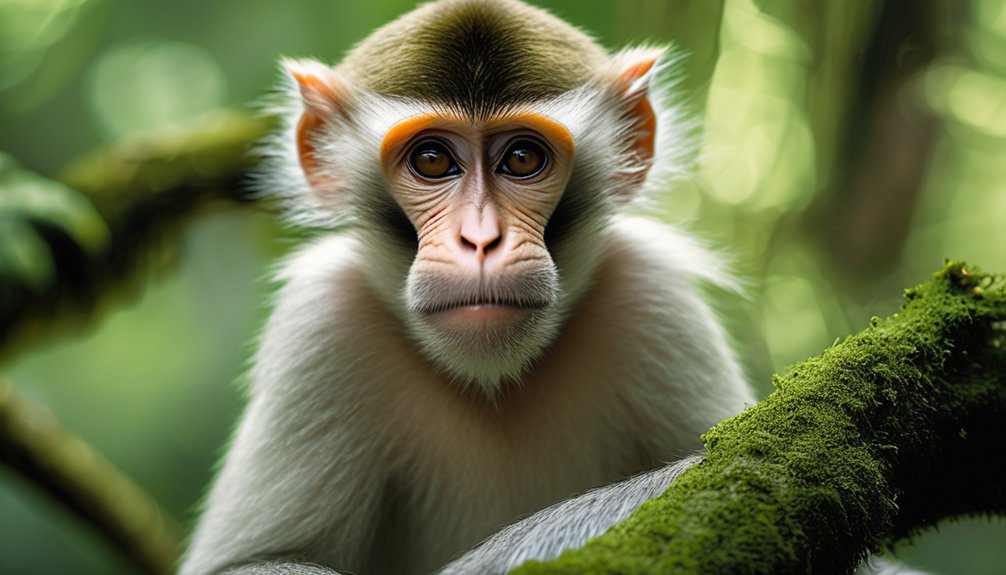
The light skin you see on monkeys in the video results from genetic variations that affect melanin production, combined with environmental factors like sunlight and habitat. These traits are natural and help monkeys adapt to their surroundings, not signs of illness. Fur coloration can change due to diet or exposure to light, creating diverse appearances among individuals. Understanding these genetic and environmental influences explains why monkeys’ skin and fur shades vary. Exploring further reveals more about this fascinating diversity.
Understanding the Genetic Basis of Light Skin in Monkeys
Although variations in skin color among monkeys may seem purely cosmetic, they actually result from specific genetic factors that influence pigmentation.
You should understand that genetic variation plays a key role in determining the shade of a monkey’s skin. Pigmentation genes, which regulate melanin production, differ among individuals and species, leading to diverse skin tones.
When you observe a light-skinned monkey, you’re witnessing the effect of particular alleles that reduce melanin synthesis. Recognizing these genetic components helps you appreciate how skin color represents inherited traits shaped by evolutionary processes, rather than random or superficial differences.
Environmental Influences on Monkey Fur Coloration
Since environmental factors greatly affect the appearance of monkey fur, it’s important to contemplate how elements like sunlight, habitat, and diet influence coloration.
You’ll find that fur pigmentation adjusts to provide adaptive camouflage, helping monkeys blend into their surroundings and avoid predators. For example, intense sunlight can lighten fur, while denser forests often foster darker shades for concealment.
Nutritional intake also plays a role; certain foods influence pigment production, subtly altering fur color.
Understanding these environmental influences clarifies why fur coloration varies, emphasizing adaptation rather than fixed genetic traits in the light-skin monkey video you’re examining.
Debunking Myths and Misconceptions About the Video
Understanding the environmental factors that influence monkey fur coloration helps clarify why some appearances, like the light skin seen in the video, might be misunderstood.
You should know that monkey pigmentation varies naturally due to genetics and environment, causing fur variation across individuals and species.
The video’s light-skin example isn’t an anomaly or a sign of illness, but a normal expression of these factors.
Avoid jumping to conclusions based on limited visuals. Instead, consider how lighting, habitat, and genetic diversity influence what you see, ensuring a more accurate understanding free from myths and misconceptions.
Frequently Asked Questions
Where Was the Light-Skin Monkey Video Originally Filmed?
The filming location was a natural monkey habitat in Southeast Asia. You’ll appreciate how the video captures these creatures freely thriving in their environment, reminding you to cherish and protect wildlife and their untamed homes.
What Species Is the Light-Skin Monkey in the Video?
You’re looking at a light-skin monkey belonging to the primate species classification called the macaque. Its light skin monkey characteristics set it apart, showing nature’s diversity and freedom in evolution’s creative expression.
How Old Is the Light-Skin Monkey Featured in the Video?
You’ll find the monkey age is around two years, showing distinct light skin characteristics that make it stand out. Its youthful energy and unique appearance symbolize the freedom and vibrancy you’re curious about.
Has the Video Gone Viral on Social Media Platforms?
Yes, the video’s gone viral on social media, sparking viral trends that celebrate freedom and curiosity. You’ll find people everywhere sharing and discussing it, embracing the joy and unpredictability it brings to your digital experience.
Are Light-Skin Monkeys Considered Endangered or Rare?
Light-skin monkeys aren’t common and face threats from habitat loss. You’ll want to support conservation efforts so these unique creatures can roam freely, preserving their wild spirit without restrictions or captivity.