

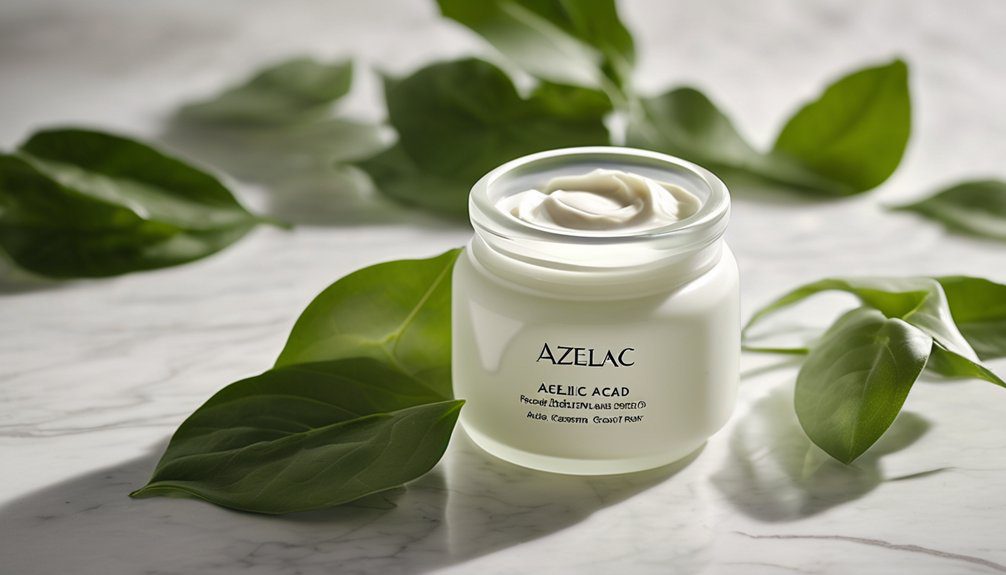
Dermatologists favor azelaic acid cream because it effectively treats acne by targeting bacteria and inflammation while also reducing pigmentation through melanin inhibition. It smooths skin texture and fades dark spots, offering a versatile solution for multiple concerns. You apply a small amount to clean skin, avoiding harsh exfoliants to prevent irritation. Using it consistently helps maintain clearer, balanced skin. Exploring its mechanisms and routine integration reveals why professionals recommend it widely.
Benefits of Azelaic Acid for Various Skin Concerns
Although azelaic acid is often recognized for its acne-fighting properties, it offers benefits for a range of other skin concerns as well.
You can use it as an effective acne treatment, targeting bacteria and inflammation that cause breakouts. Additionally, azelaic acid supports pigmentation reduction by inhibiting melanin production, which helps fade dark spots and uneven skin tone.
This dual action makes it versatile for managing multiple skin issues without needing separate products. By incorporating azelaic acid cream into your routine, you gain a practical solution that addresses both acne and pigmentation, enhancing your skin’s overall clarity and balance.
How Azelaic Acid Works on the Skin
When you apply azelaic acid cream to your skin, it works by targeting several key processes that contribute to common skin concerns.
Its mechanism action involves inhibiting the growth of acne-causing bacteria and reducing inflammation.
Through efficient skin absorption, azelaic acid penetrates the pores to normalize keratin production, preventing blocked follicles.
This action helps reduce hyperpigmentation by inhibiting melanin synthesis, leading to a more even skin tone.
By addressing these factors simultaneously, azelaic acid supports clearer, smoother skin.
Understanding this mechanism action clarifies why it’s a versatile option in dermatology for various skin issues.
Incorporating Azelaic Acid Cream Into Your Skincare Routine
Since azelaic acid cream interacts with multiple skin functions, incorporating it into your skincare routine requires careful consideration of timing, product combinations, and application methods.
Begin by applying a pea-sized amount to clean, dry skin, using gentle upward strokes to guarantee even distribution. Avoid combining azelaic acid with exfoliants or retinoids simultaneously, as this may increase irritation. Instead, alternate these products on different days or times.
Pair azelaic acid cream with hydrating moisturizers and sunscreens to support skin barrier health. Understanding proper application techniques and mindful skincare combinations allows you to maximize benefits while minimizing potential side effects.
Frequently Asked Questions
Can Azelaic Acid Cream Be Used During Pregnancy?
You can use azelaic acid cream during pregnancy, but you should follow safety guidelines and consult your doctor first. Pregnancy skincare needs extra care, so getting professional advice helps you stay safe and free to enjoy glowing skin.
Is Azelaic Acid Safe for Sensitive Skin Types?
Yes, azelaic acid is generally safe for sensitive skin. You should start with a patch test and use gentle application tips—like applying a small amount and moisturizing afterward—to enjoy its benefits without irritation or restriction.
How Long Does It Take to See Results With Azelaic Acid Cream?
You’ll typically see results within 4 to 8 weeks, but the timeline varies. Compared to other treatments, azelaic acid offers steady effectiveness, letting you enjoy clearer skin without feeling trapped by harsh chemicals or long waits.
Can Azelaic Acid Cream Be Combined With Other Acne Treatments?
Yes, you can combine azelaic acid cream with other acne treatments. Using combination therapies creates treatment synergy, enhancing results. Just make sure to introduce products gradually to avoid irritation and enjoy your skin freedom confidently.
Are There Any Side Effects of Long-Term Azelaic Acid Use?
Yes, you might experience mild side effects like dryness or redness from long-term use, but they usually fade. Staying consistent and moisturizing can help you enjoy azelaic acid while keeping your skin free and healthy.