

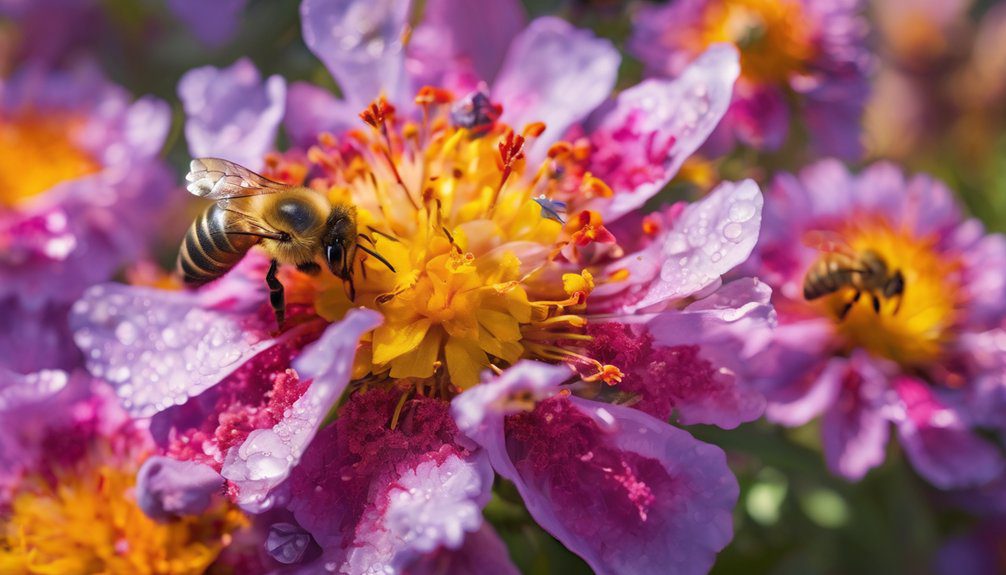
Bees avoid certain flowers mainly because of low nectar quality, unfavorable flower shapes, or chemical signals indicating poor rewards or toxicity. This selective behavior helps you design a garden that supports healthy pollination by choosing plants with rich nectar, accessible structures, and attractive scents. Avoiding less beneficial flowers encourages more efficient foraging, benefiting your garden’s ecosystem. Understanding these factors lets you create a pollinator-friendly environment tailored to natural bee preferences.
Factors Influencing Bees’ Flower Preferences
Although bees visit a wide variety of flowers, several key factors influence their preferences. One major factor is pollen availability, which guarantees bees have enough protein to support their colony.
You’ll notice bees favor flowers abundant in pollen, especially during critical periods. Seasonal blooms also play a significant role since bees adapt to the timing of flower emergence in their environment.
When certain flowers bloom, bees shift their focus to those providing the best resources. Understanding these factors helps you design gardens that align with natural bee activity, promoting healthier pollinator populations while respecting their freedom to choose.
The Role of Nectar Quality and Quantity
Since nectar provides essential energy for bees, its quality and quantity greatly affect their flower choices.
When you observe bees selecting flowers, they respond to the nectar composition, which includes sugar concentration and nutrient balance.
Flowers offering a higher nectar reward attract more visits because bees aim to maximize their energy intake efficiently.
If nectar quantity is low or composition lacks key sugars, bees tend to avoid those flowers, seeking better sources.
Understanding this helps you design gardens that support bee activity by including plants with rich, abundant nectar rewards, encouraging pollination and a thriving ecosystem.
How Flower Shape and Color Affect Bee Visits
Bees rely heavily on visual cues like flower shape and color to identify suitable plants for foraging.
Flower color plays a critical role in bee attraction, as bees are drawn to bright hues such as blue, violet, and yellow.
Shape variations also influence their choices; flowers with open or tubular shapes accommodate different bee species, making nectar access easier.
Additionally, floral patterns like spots or stripes guide bees directly to nectar sources, enhancing foraging efficiency.
Understanding how these visual elements affect bee visits helps you select plants that encourage pollination and support your garden’s ecological balance.
Chemical Signals and Bee Avoidance
When plants emit certain chemical signals, they can influence whether bees choose to visit or avoid them.
These chemical signals often come through the flower scent, which bees detect with sensitivity. If a flower’s scent contains compounds that indicate low nectar rewards or potential toxicity, bees will likely steer clear. This avoidance helps bees conserve energy and avoid harmful substances.
Understanding these chemical signals explains why some flowers, despite their appearance, don’t attract bees. By recognizing how flower scent affects bee behavior, you can better appreciate the natural communication that shapes pollination patterns in your garden.
Enhancing Your Garden by Understanding Bee Behavior
Understanding how flowers use chemical signals to attract or repel pollinators provides valuable insight into bee behavior.
By recognizing the importance of bee diversity in your garden, you can improve pollination efficiency through strategic garden design. Selecting a variety of plants that emit attractive chemical cues encourages visits from different bee species, enhancing overall pollination.
Avoiding plants that repel bees or offer little reward helps maintain a healthy pollinator population. Thoughtful plant selection not only supports bees but also results in a more productive and resilient garden ecosystem, aligning with your goal of creating a space that thrives naturally and freely.
Frequently Asked Questions
Do All Bee Species Avoid the Same Flowers?
Not all bee species avoid the same flowers; you’ll find they choose based on flower color and nectar availability. Understanding these preferences lets you cultivate a garden that frees bees to thrive and pollinate effectively.
Can Bees’ Flower Preferences Change Seasonally?
Yes, your bees’ flower preferences shift with seasonal blooms and nectar availability. They’ll freely explore whatever’s abundant, adapting their foraging to what’s open, helping your garden thrive naturally throughout the year.
How Do Pesticides Affect Bees’ Flower Choices?
Pesticide toxicity reduces flower attractiveness, so you’ll notice bees avoiding treated blooms to stay safe. Protecting your garden means choosing pesticide-free plants, letting bees freely explore and pollinate without harmful risks limiting their natural choices.
Are There Flowers Bees Never Visit Regardless of Conditions?
Yes, some flowers have toxic nectar or poor nectar quality, so bees avoid them no matter the conditions. You’ll want to focus on bee-friendly blooms to keep your garden buzzing freely and thriving naturally.
Can Planting Avoided Flowers Harm Bee Populations?
No, planting avoided flowers won’t harm bee populations because bee behavior naturally steers them away from toxic blooms. You’re free to choose plants, trusting bees to protect themselves from harmful flower toxicity.
