

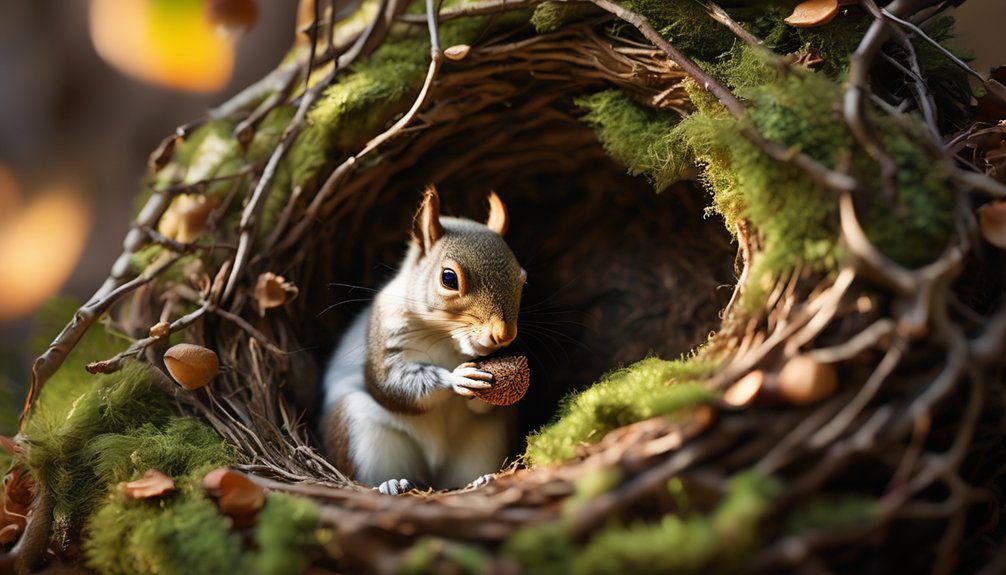
You’ll find squirrels build nests using twigs, leaves, moss, and bark, weaving twigs tightly to form a sturdy frame. Inside, they line the nest with softer materials for comfort and insulation. The nest design helps block wind and rain while trapping body heat to keep warm. Seasonal changes lead squirrels to add more insulation and adjust their behavior to avoid predators. Exploring these construction and survival strategies reveals even more about their adaptability in nature.
Materials and Techniques Used in Nest Construction
Although squirrels adapt their building methods depending on available resources, they generally rely on a combination of twigs, leaves, moss, and bark to create their nests.
You’ll notice these nesting materials are carefully selected for durability and flexibility. Squirrels use specific construction techniques, weaving twigs into a sturdy framework and layering softer materials inside for comfort.
This approach allows them to build secure, functional homes even in varying environments. Understanding these materials and construction techniques reveals how squirrels efficiently use what’s around them, embodying a resourceful and adaptive spirit that supports their survival and freedom in the wild.
The Role of Nest Design in Protection and Insulation
When you examine squirrel nests, you’ll find their design plays an essential role in providing both protection and insulation.
Their nest architecture maximizes insulation efficiency, creating a safe, warm environment. You’ll notice these key features:
- Dense outer layers shield against wind and rain.
- Inner lining traps body heat for warmth.
- Strategic placement in trees reduces predator access.
- Compact shape minimizes exposed surface area.
Seasonal Adaptations and Survival Strategies of Squirrels
Squirrels adjust their behaviors and physical traits to cope with changing seasons, ensuring their survival throughout the year.
You’ll notice they increase food storage efforts during autumn, gathering nuts and seeds to sustain themselves through scarce winter months. Their nests become better insulated with additional leaves and twigs to conserve heat.
Predator avoidance also shifts seasonally; in colder months, squirrels are more cautious and limit movement to reduce exposure.
These adaptations combine to help squirrels maintain energy and safety, allowing them to thrive despite environmental challenges.
Understanding these strategies reveals their resilience and resourcefulness in the wild.
Frequently Asked Questions
How Long Do Squirrels Live in the Wild?
You’ll find the squirrel lifespan in the wild usually lasts around 6 years, though wild survival challenges can shorten that. They adapt and thrive, embracing freedom despite predators and harsh conditions, living life on their own terms.
What Predators Commonly Threaten Squirrels?
You’ll face hawk threats soaring above and snake predators lurking below. Staying alert and swift keeps you free, helping you dodge these dangers while you explore and enjoy your wild, untamed world.
Do Squirrels Share Nests With Other Animals?
You won’t often see squirrels sharing nests; their squirrel nesting behavior favors solitude. However, occasional interspecies interactions happen, like birds or insects using abandoned nests, but squirrels usually guard their freedom fiercely and keep their homes to themselves.
How Do Baby Squirrels Develop Inside the Nest?
You’ll watch baby squirrels grow through key developmental stages within the cozy nest environment, where they stay safe, warm, and nurtured until they’re ready to explore the world and embrace their freedom outside.
Can Squirrels Reuse Old Nests Year After Year?
Yes, squirrels often reuse old nests, but you’ll see them doing nest maintenance by adding fresh nesting materials to keep it cozy. They know freedom means adapting their homes without starting completely from scratch every year.
