

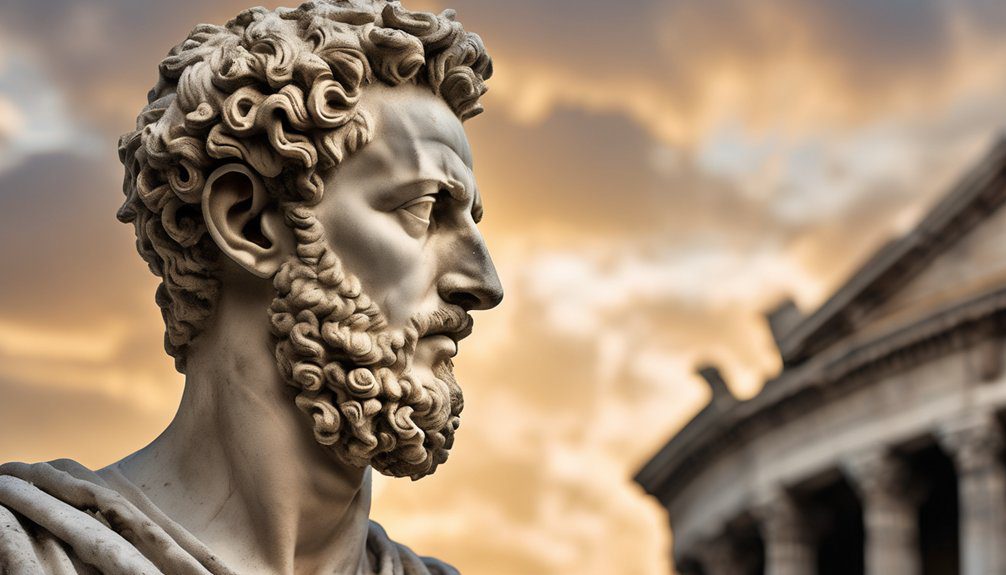
Marcus Aurelius was a good emperor by balancing military defense, ethical leadership, and practical governance effectively. You’d see him managing threats along Rome’s borders while applying Stoic principles to promote justice and self-control. His domestic policies improved administration and economic stability, reducing corruption and protecting citizens’ rights. This combination of moral integrity and resilience helped maintain the empire’s stability. Exploring his leadership further reveals why his rule remains influential today.
Early Life and Rise to Power
Although Marcus Aurelius is often remembered for his philosophical writings, his early life and rise to power played a crucial role in shaping his reign as Roman Emperor.
You’ll see that his childhood influences, including a noble family background and early exposure to politics, prepared him well. His education background was rigorous, focusing on philosophy, rhetoric, and law, which helped him develop clear thinking and discipline.
These elements combined to form a leader who valued reason and justice, setting the foundation for his approach to governance. Understanding this context helps you appreciate the roots of his leadership style.
Military Campaigns and Challenges
When Marcus Aurelius became emperor, he faced significant military challenges that tested his leadership and strategic abilities.
You’d see how his military strategy focused on defending the empire against persistent barbarian invasions, especially along the Danube frontier. His campaigns required constant vigilance and adaptation to shifting threats.
Key aspects include:
- Coordinating large-scale troop movements to repel invasions
- Maintaining supply lines under difficult conditions
- Balancing military demands with civil governance
These efforts helped secure Rome’s borders during a turbulent era, highlighting his commitment to protecting freedom within the empire’s territories.
Philosophical Approach to Leadership
Marcus Aurelius managed his military responsibilities while grounding his decisions in Stoic philosophy, which deeply influenced his leadership style.
You can see how his commitment to stoic philosophy shaped his view of duty, encouraging restraint and fairness even in difficult times. This approach promoted ethical leadership, as he prioritized justice and self-control over personal gain.
By embracing these principles, he aimed to serve the Roman people responsibly, balancing power with moral integrity.
If you value freedom, his leadership shows how philosophy can guide rulers to respect individual rights and make decisions rooted in ethical considerations.
Domestic Policies and Governance
Since effective governance requires balancing diverse social and economic needs, Aurelius focused on stabilizing the empire through practical domestic policies.
You’ll see his attention to civil administration aimed to improve justice and reduce corruption. His economic reforms sought to ease tax burdens and support trade, fostering a more resilient economy. These efforts helped maintain order and promote individual freedoms within the empire.
Key aspects include:
- Strengthening provincial governance to guarantee fairness and efficiency
- Implementing economic reforms that encouraged commerce and eased financial pressures
- Enhancing legal frameworks to protect citizens’ rights and property
Aurelius’ domestic policies reflected practical governance focused on stability and freedom.
Assessment of Legacy and Impact
Although his reign faced significant military and economic challenges, Aurelius left a lasting impact on the Roman Empire through his commitment to principled leadership and thoughtful governance.
When you conduct a legacy evaluation, you see his dedication to justice and duty shaped future rulers’ expectations. His Meditations continue influencing ideas about personal responsibility and leadership.
In your impact assessment, note that despite external pressures, he maintained stability and promoted legal reforms. This balance between strength and philosophy defines his rule.
You can appreciate his legacy as one that blends ethical governance with practical resilience, offering valuable lessons on freedom and authority.
Frequently Asked Questions
Did Marcus Aurelius Have Any Children?
Yes, Marcus Aurelius had children, and his parenting philosophy reflected his Stoic values, shaping his imperial legacy. You’ll appreciate how he balanced duty with personal growth, promoting freedom through wisdom and responsibility in his family and empire.
What Languages Did Marcus Aurelius Speak?
You’d find Marcus Aurelius fluent in Greek and proficient in Latin, using both languages to express his philosophical influences and military rhetoric, empowering free thought and leadership through the wisdom of Stoic teachings and practical command.
Was Marcus Aurelius Married?
Yes, Marcus Aurelius was married to Faustina the Younger. Their marriage dynamics reflected imperial relationships, balancing duty and personal bonds. You can appreciate how even powerful figures navigated complex connections while endeavoring for freedom.
How Did Marcus Aurelius Die?
You’ll find Marcus Aurelius died from the plague’s impact during his reign. His death left a strong legacy, reminding you how even powerful leaders face life’s harsh realities while inspiring freedom and resilience.
Did Marcus Aurelius Write Any Books Besides Meditations?
Marcus Aurelius didn’t write books beyond Meditations, but his philosophical influences deeply shaped this work. His literary contributions inspire you to embrace freedom, self-discipline, and reason, guiding your path toward inner peace and autonomy.
