

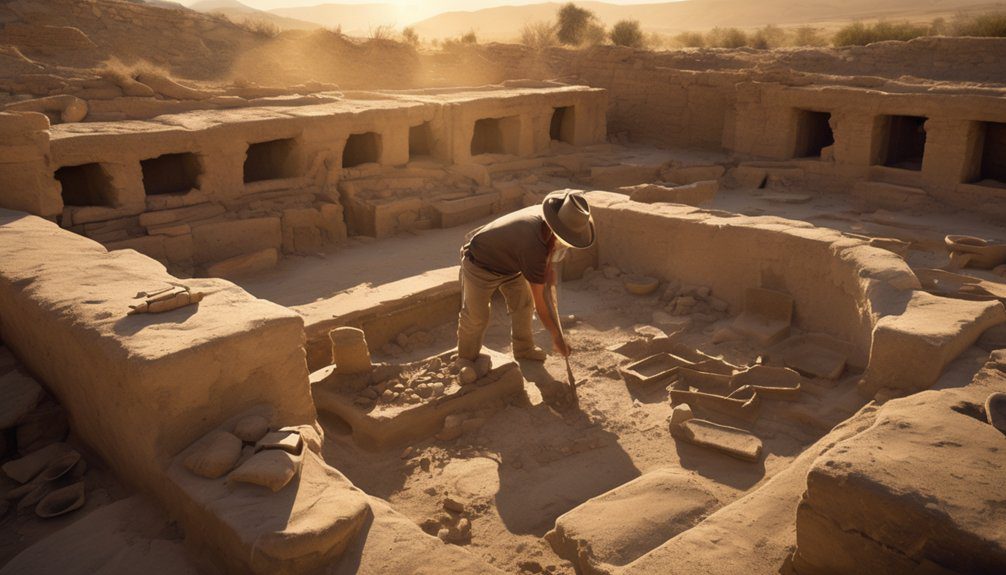
You’ll find that archaeology often supports many historical details in the Bible through artifacts and site excavations linked to biblical events. However, some findings challenge a strictly literal interpretation, revealing discrepancies and alternative contexts. This research prompts scholars to reconsider and refine traditional understandings while respecting cultural and historical backgrounds. Archaeology provides valuable insights that deepen the discussion about biblical accuracy and complexity, offering a more nuanced perspective you can explore further.
Archaeological Evidence Supporting Biblical Narratives
Although some details in the Bible remain debated, archaeological discoveries have provided significant support for many of its historical narratives.
When you examine ancient artifacts, you find tangible evidence that aligns with the Bible’s historical context. These findings include inscriptions, pottery, and ruins that correspond to locations and events described in biblical texts.
Discrepancies and Challenges in Biblical Archaeology
While archaeological research has confirmed many aspects of biblical history, it also presents discrepancies and challenges that complicate straightforward interpretations.
You’ll find that the historical context often differs from biblical accounts, requiring careful analysis to reconcile differences. Textual criticism plays a vital role in examining variations between manuscripts, which can affect how archaeological findings align with the Bible.
Some sites yield evidence that contradicts traditional timelines or narratives, pushing you to question assumptions. These challenges don’t negate the Bible’s value but invite a deeper, more nuanced understanding of its historical claims and archaeological record.
Impact of Archaeological Discoveries on Biblical Interpretation
As new archaeological discoveries emerge, they increasingly influence how you interpret biblical texts by providing additional context and evidence.
These findings offer valuable historical context that can confirm or challenge traditional views. When you examine these discoveries, they often prompt you to reconsider your interpretive frameworks, encouraging a more nuanced understanding of the scriptures.
By integrating archaeological data, you gain freedom from strictly literal readings, allowing for interpretations that respect both the cultural setting and textual complexity.
This ongoing dialogue between archaeology and biblical studies enriches your grasp of the Bible’s messages within their authentic historical environments.
Frequently Asked Questions
How Do Biblical Translations Affect Historical Accuracy?
You’ll notice translation nuances can shift meanings, and textual variants sometimes cause confusion. By exploring different versions, you gain freedom to interpret the Bible more openly while understanding its historical layers and complexities better.
What Role Do Ancient Non-Biblical Texts Play in Verifying the Bible?
You’ll find that ancient manuscripts outside the Bible provide vital historical context, helping you verify events and cultural details. These texts give you freedom to explore and confirm biblical narratives beyond scripture alone.
How Has Modern Technology Advanced Biblical Archaeology?
You’ll find modern technology like remote sensing and digital mapping lets you explore biblical sites without restrictions. These tools reveal hidden structures, helping you access history freely and more accurately than ever before.
Are There Specific Biblical Events With No Archaeological Evidence?
Yes, you won’t find direct archaeological evidence for some biblical flood myths or certain ancient cities mentioned. Still, these stories inspire your quest for freedom through exploring history’s mysteries and understanding human culture deeply.
How Do Different Religious Traditions View Biblical Historicity?
You’ll find religious perspectives vary widely: some embrace literal historical interpretations, while others see biblical stories as symbolic. Your freedom to explore lets you appreciate these diverse views without feeling bound to one tradition’s understanding.
