

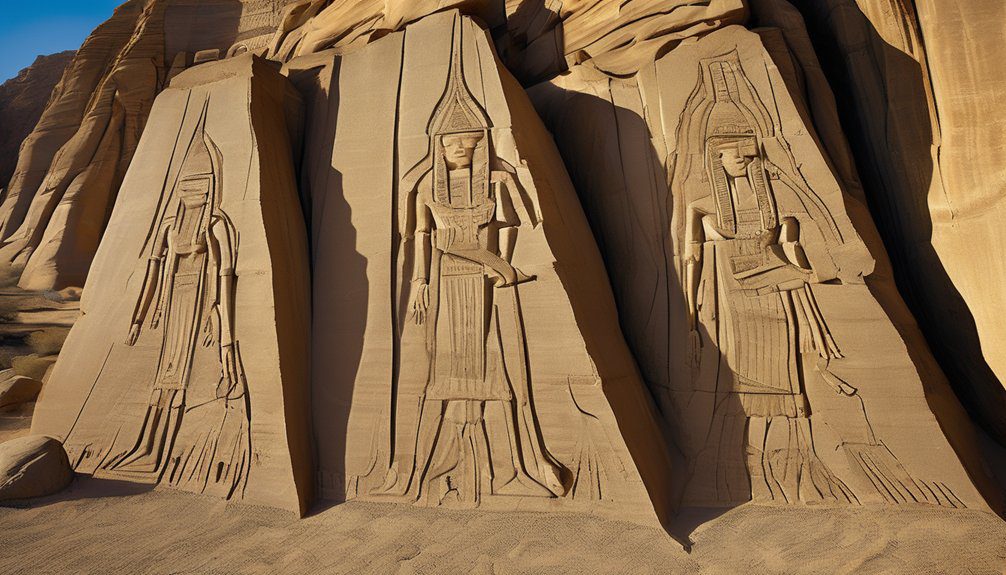
You can tell the Balochistan sphinx carvings result from both natural weathering and human modification. Geological forces like erosion and tectonic shifts shape the landscape and create features resembling carved figures. However, archaeological evidence, such as precise tool marks and distinct patterns, indicates deliberate craftsmanship by ancient peoples. Comparing these carvings with other sphinx-like structures reveals unique cultural influences. Exploring these factors will help you better understand the intricate balance between nature’s role and human artistry in Balochistan.
Geological Processes Shaping the Balochistan Landscape
Several geological processes have played an essential role in shaping the diverse landscape of Balochistan.
You’ll notice that tectonic activity constantly shifts the earth’s crust here, creating mountain ranges and fault lines. These movements fracture the rock, making it more vulnerable to natural forces.
Over time, erosional features like valleys, cliffs, and weathered rock surfaces form as wind, water, and temperature changes wear down the terrain.
Understanding these processes helps you grasp how Balochistan’s unique topography developed without human intervention. This knowledge sets the foundation for exploring whether certain formations, like the sphinx carvings, result from nature or crafted tools.
Archaeological Evidence of Ancient Craftsmanship
Although natural forces have shaped much of Balochistan’s terrain, archaeological findings provide clear evidence that ancient peoples actively modified their environment through skilled craftsmanship.
You’ll find that ancient artisanship in the region includes intricate carvings and tool marks distinct from natural erosion. These artifacts highlight the cultural significance of such creations, reflecting deliberate efforts to express identity or spirituality.
When you examine these carvings closely, you see patterns and techniques indicating human involvement rather than random weathering. This evidence allows you to appreciate the thoughtful workmanship of past communities, underscoring their role in shaping Balochistan’s historical landscape.
Comparative Analysis With Other Sphinx-Like Structures
When you compare the Balochistan Sphinx carvings with other sphinx-like structures around the world, distinct differences and similarities emerge in design, purpose, and cultural context.
Sphinx symbolism often represents guardianship or divine power, as seen in Egyptian and Mesopotamian examples.
However, the Balochistan carvings display unique stylistic traits that suggest a different cultural significance, possibly linked to local beliefs or natural phenomena.
Unlike traditional sphinxes, these carvings may serve as territorial markers or spiritual symbols.
Understanding these distinctions helps you appreciate how sphinx symbolism adapts across cultures while maintaining core themes of protection and authority.
