

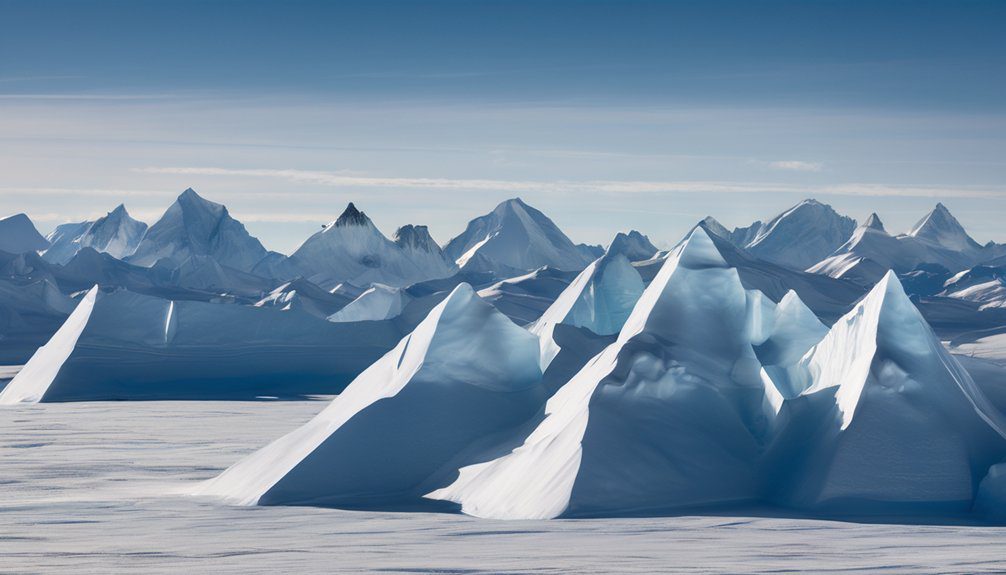
You keep seeing photos of pyramid-shaped formations in Antarctica because natural geological processes, like erosion and ice movement, create sharp, pyramid-like shapes without human involvement. Your brain is wired to spot familiar patterns, so these formations easily appear as pyramids. Social media then spreads these images quickly, often boosting sensational or conspiratorial views. These shapes also tap into longstanding pyramid myths from history. Understanding these factors clarifies why such beliefs persist and reveals more about this fascinating topic.
The Science Behind Antarctic Pyramid Shapes
Although the pyramid shapes found in Antarctica have sparked various theories, scientific research explains their formation through natural geological processes.
You should understand that these pyramid-like features result from specific geological formations shaped by erosion, weathering, and the movement of ice structures over time.
The combination of wind, freezing temperatures, and shifting ice causes certain rock formations to take on sharp, angular shapes resembling pyramids.
These natural factors, rather than human intervention, account for the distinctive appearance.
Recognizing this helps you appreciate the complexity of Antarctica’s landscape without attributing it to unfounded speculation.
Psychological Factors Driving Pattern Recognition
Human brains are wired to identify patterns in the world around them, a cognitive process known as pattern recognition.
When you see pyramid-like shapes in Antarctica, your visual perception naturally tries to make sense of these forms.
However, cognitive biases can influence this process, leading you to interpret random or natural formations as deliberate structures.
Confirmation bias, for example, might cause you to focus on images that support pyramid theories while ignoring contradictory evidence.
Understanding these psychological factors helps you recognize why your mind searches for familiar shapes, even when the reality may be far less extraordinary.
The Role of Social Media in Spreading Theories
Your tendency to recognize familiar shapes, like pyramids, feeds into how information spreads online, especially on social media platforms.
These platforms amplify viral content rapidly, allowing images suggesting Antarctic pyramids to reach wide audiences. You might notice how conspiracy culture thrives in these spaces, where sensational claims gain traction without rigorous verification.
Algorithms prioritize engagement, often favoring controversial or mysterious topics, which encourages sharing and discussion. This environment makes it easier for unproven theories to persist, as users seek freedom to explore alternative ideas.
Understanding this dynamic helps you critically assess what you encounter on social media.
Historical Context of Pyramid Mythology and Exploration
Since ancient times, pyramids have captured human curiosity due to their distinctive shape and mysterious origins. You’ll find that ancient civilizations worldwide built pyramids, inspiring many exploration narratives.
These stories often spark imaginations about lost knowledge or civilizations. When you explore pyramid mythology and exploration, consider these points:
- The Egyptian pyramids symbolize power and religious beliefs.
- Mesoamerican cultures constructed pyramids for ceremonial purposes.
- Exploration tales often link pyramids to secret histories.
- Antarctica’s pyramid-like formations fuel modern myths despite lacking archaeological evidence.
Understanding this context helps you appreciate why pyramid imagery continues to fascinate freedom-seeking minds.
