

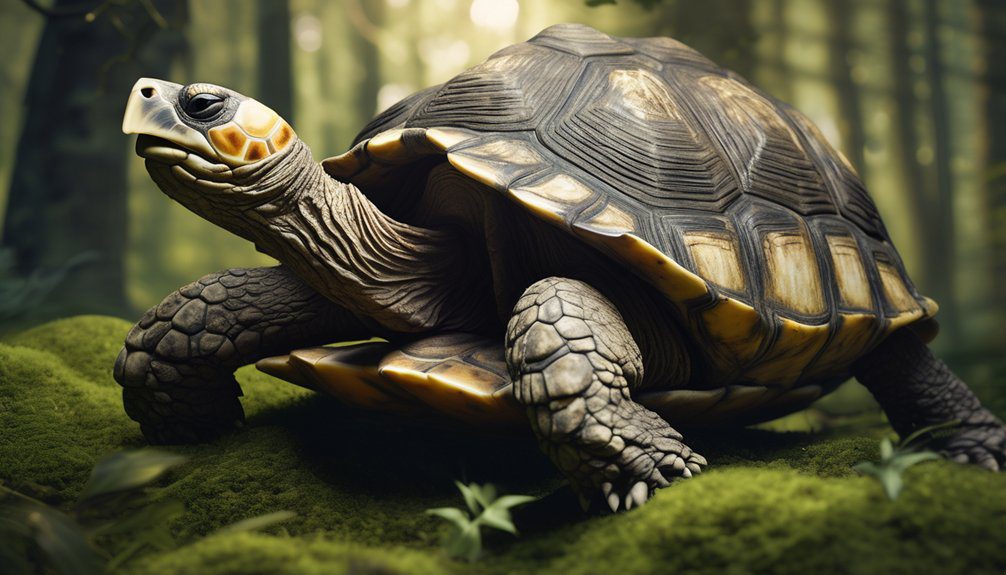
You might be surprised to learn that the Greenland shark is one of the oldest living animals today, capable of living for centuries in cold, deep ocean waters. Other long-lived species include the immortal jellyfish, which reverses aging, and the ocean quahog clam, living over 500 years. Land animals like the Aldabra giant tortoise exceed a century, while the bowhead whale thrives for over 200 years in Arctic seas. Exploring these remarkable lifespans reveals how nature sustains life in extreme environments.
The Greenland Shark: A Centuries-Old Deep-Sea Resident
Although it lives in the cold, dark depths of the North Atlantic Ocean, the Greenland shark has captured scientific interest due to its remarkable longevity.
You’ll find this species thriving in the Greenland habitat, where frigid temperatures and limited light define its environment. Its Arctic adaptation includes a slow metabolism, enabling it to survive for centuries in these extreme conditions.
This shark’s ability to endure such a harsh habitat reflects a unique evolutionary path. Understanding its life cycle offers insight into how some animals achieve extraordinary lifespans, highlighting nature’s capacity to adapt and thrive in demanding ecosystems.
The Immortal Jellyfish: Defying Aging Through Regeneration
When you examine the life cycle of the immortal jellyfish, you discover a remarkable ability to reverse aging through cellular regeneration.
This creature leverages jellyfish regeneration to revert from its adult medusa stage back to the juvenile polyp stage, effectively resetting its biological clock. This unique process grants it biological immortality, allowing it to avoid death from aging under ideal conditions.
By continuously renewing its cells and cycling through life stages, it escapes the typical lifecycle constraints that limit most animals.
Understanding this mechanism offers insights into regeneration and longevity, highlighting nature’s diverse strategies for survival and freedom from aging.
The Ocean Quahog: a Shellfish With a Millennial Lifespan
While it may seem surprising, the ocean quahog is one of the longest-living animals on Earth, with some individuals reaching over 500 years of age. This shellfish thrives in its ocean habitat, demonstrating remarkable shellfish longevity.
You’ll find these clams burrowed in the seabed, enduring cold, stable environments that support their extended lifespans.
Consider these points about ocean quahogs:
- They grow very slowly, which contributes to their longevity.
- Their shells record environmental data, revealing centuries of ocean history.
- They reproduce late but effectively, ensuring survival across generations.
Understanding their lifespan offers insight into marine life’s resilience.
Aldabra Giant Tortoise: Land Turtle Living Beyond a Century
The Aldabra giant tortoise stands out as one of the longest-living land animals, regularly surpassing 100 years of age.
If you study this tortoise, you’ll find it plays a key role in tortoise conservation efforts due to its unique biology and habitat. Researchers focus on longevity research involving Aldabra tortoises to understand aging mechanisms in land animals.
These tortoises inhabit remote islands where protection has helped their populations thrive. By learning from their slow aging and resilience, scientists aim to apply insights to broader animal conservation and longevity studies, highlighting the tortoise’s ecological and scientific significance.
The Bowhead Whale: Long-Lived Mammal of the Arctic Seas
Although bowhead whales inhabit some of the coldest waters on Earth, they’ve adapted to thrive in the Arctic seas for centuries.
You’ll find these mammals traversing vast distances during their bowhead migration, a journey crucial for feeding and breeding. Their Arctic habitat offers unique challenges and opportunities.
Consider these key facts about bowhead whales:
- They can live over 200 years, making them among the longest-lived mammals.
- Their thick blubber insulates them from extreme cold.
- They use bow-shaped skulls to break through sea ice.
Understanding bowhead whales highlights nature’s resilience in harsh environments.
Frequently Asked Questions
How Do Scientists Determine the Age of These Ancient Animals?
You use radiocarbon dating and count growth rings to determine age. These methods let you explore an animal’s history freely, revealing secrets without constraints, so you understand their true, ancient timeline confidently and independently.
What Threats Do These Long-Lived Species Currently Face?
You face threats like climate change and habitat destruction, which disrupt these species’ natural environments. Protecting their freedom to thrive means tackling these issues head-on and preserving their habitats for generations to come.
Are There Any Conservation Efforts to Protect These Animals?
Yes, you’ll find conservation strategies focused on habitat preservation to protect these animals. By supporting such efforts, you help maintain their freedom and natural environment, ensuring their survival without unnecessary restrictions or interference.
How Do These Animals’ Lifespans Compare to Humans?
You’ll see lifespan comparisons show these animals reach age milestones far beyond humans, often living centuries. They defy typical limits, inspiring you to appreciate life’s vast potential and freedom beyond conventional boundaries.
Can Studying These Animals Help Extend Human Longevity?
Yes, studying these animals can boost your longevity research by revealing age-related genetics that resist aging. Uncovering their secrets might help you extend your healthy years and embrace life’s freedom with vigor.
