

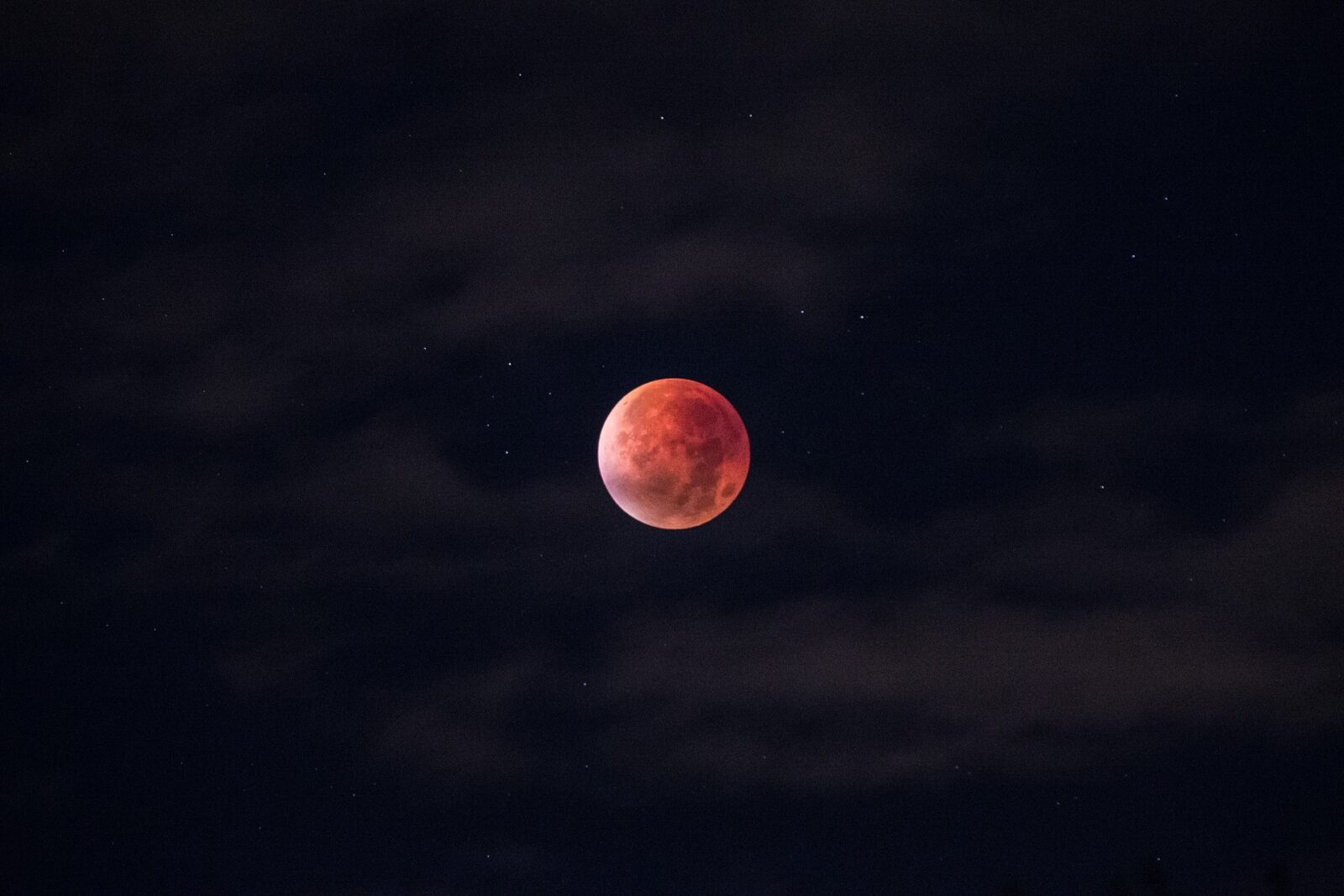
September 2025 will deliver a rare double feature in the sky: a dramatic total lunar eclipse turning the Moon a copper-red, followed two weeks later by a deep partial solar eclipse that will reshape the Sun into a glowing crescent at sunrise.
Together, the events mark the peak of an eclipse season, when the Earth, Moon, and Sun align twice in quick succession. While billions of people will see the September 7–8 “blood moon”, only a fraction of the world—mostly in the Southern Hemisphere—will witness the September 21–22 solar eclipse.
Here’s everything you need to know, from exact timings and visibility maps to safe viewing tips and what to expect next.
Total Lunar Eclipse: September 7–8, 2025
The first act of September’s eclipse season is the more widely visible: a total lunar eclipse during the full corn moon.
-
Date: Night of September 7–8, 2025
-
Duration: ~5 hours from penumbral start to end
-
Totality: 82 minutes
-
Color: Coppery “blood moon”
-
Visibility: Asia, Australia, the Pacific, parts of Eastern Europe, and Africa at moonrise
What Happens During a Total Lunar Eclipse?
As the Earth moves directly between the Sun and the Moon, it casts its shadow across the lunar surface. Instead of going completely dark, the Moon glows red or orange as sunlight filters through Earth’s atmosphere—sunrises and sunsets projected onto the lunar disk.
Where You Can See It
-
Perfect View: Asia, Australia, Pacific islands
-
Partial View: Eastern Europe, Africa (at moonrise)
-
Missed Out: North and South America (on Earth’s daytime side)
This eclipse is the reverse of the March 2025 total lunar eclipse, which favored the U.S. and Canada.
The Corn Moon Rises
Even in North America, where the eclipse is invisible, the September full moon will rise dramatically on September 7. Known traditionally as the Corn Moon or Barley Moon, it marks the final full moon of summer in the Northern Hemisphere, glowing low and orange before brightening higher in the night sky.
Partial Solar Eclipse: September 21–22, 2025
Two weeks later, the Moon shifts from Earth’s shadow to blocking the Sun directly. Unlike lunar eclipses, solar eclipses are dangerous to watch without protection—viewers must use certified eclipse glasses or solar filters.
-
Date: September 21–22, 2025 (depending on longitude)
-
Maximum Coverage: 85% of the Sun’s disk
-
Visibility: Southern Hemisphere—New Zealand, Pacific islands, Antarctica
Where You Can See It
-
New Zealand: Up to 73% of the Sun covered at sunrise—crescent Sun on the horizon.
-
Antarctica: Deepest view, nearly 80%.
-
Pacific Islands (Fiji, Tonga): Significant obscuration at dawn.
-
Ocean Maximum: The deepest eclipse, ~85%, occurs over the South Pacific.
Unlike the blood moon, this solar eclipse reaches only about 16.6 million people.
Why Eclipses Come in Pairs
Eclipse seasons happen when the Moon’s tilted orbit lines up with the ecliptic, the Sun’s apparent path through the sky.
-
Full Moon Alignment → Lunar Eclipse
-
New Moon Alignment → Solar Eclipse
That’s why September’s lunar eclipse is followed closely by a solar event.
September’s Eclipses at a Glance
| Date | Type of Eclipse | Max Duration | Visibility |
|---|---|---|---|
| Sept. 7–8, 2025 | Total Lunar Eclipse | 82 min totality | Asia, Australia, Pacific, partial in Europe/Africa |
| Sept. 21–22, 2025 | Partial Solar Eclipse | Up to 85% Sun covered | New Zealand, Pacific Islands, Antarctica |
How Many People Can See Them?
-
Lunar Eclipse: Visible to 6.2 billion people (~77% of the world population).
-
Solar Eclipse: Limited to 16.6 million people, mostly in sparsely populated regions.
Safe Viewing Tips
Lunar Eclipse
-
Safe to Watch with Naked Eye: No special equipment required.
-
Best Experience: Use binoculars or a small telescope for detail.
-
Photography Tip: A DSLR or mirrorless camera with a zoom lens (200mm+) can capture the copper glow.
Solar Eclipse
-
NEVER Look Directly: Permanent eye damage can occur.
-
Use Certified Glasses: ISO 12312-2 compliant eclipse glasses only.
-
Solar Filters: Place over telescopes, binoculars, or cameras—not behind the optics.
-
Pinhole Projection: A safe, low-tech method for children and classrooms.
The Science of September’s Blood Moon
Why does the Moon look red? It’s due to Rayleigh scattering, the same effect that makes sunsets red. Shorter blue wavelengths scatter out, leaving longer red wavelengths to filter through Earth’s atmosphere and reflect onto the lunar surface.
The exact shade depends on:
-
Atmospheric dust levels (volcanoes, wildfires)
-
Cloud cover
-
Pollution
Expect a deep copper glow if skies are clear across Asia and the Pacific.
Looking Ahead: The Next Eclipses
September’s twin events close out the 2025 eclipse calendar. But 2026 will be even busier:
-
Feb. 17, 2026: Annular Solar Eclipse — Antarctica
-
Mar. 3–4, 2026: Total Lunar Eclipse — Asia, Australia, North America
-
Aug. 12, 2026: Total Solar Eclipse — Greenland, Iceland, Spain (major event for Europe)
-
Aug. 28, 2026: Partial Lunar Eclipse — Americas, Europe, Africa
Mark August 12, 2026: a total solar eclipse over Spain promises to be one of the most spectacular of the decade.
Why These Eclipses Matter
-
Astronomy: Natural demonstrations of orbital mechanics.
-
Culture: Blood moons inspire myths, traditions, and rituals across societies.
-
Education: Safe, global opportunities for students to connect with science.
-
Tourism: Travel companies are already selling eclipse-chasing packages.
September 2025 offers skywatchers a cosmic double bill:
-
An 82-minute blood moon, visible to most of the world.
-
A crescent Sun at dawn, visible to a lucky few.
If you live in Asia, Australia, or the Pacific, clear your schedule for September 7–8. If you’re in New Zealand, Fiji, or Antarctica, sunrise on September 21–22 will bring one of nature’s rarest spectacles.
Wherever you are, never miss a chance to look up.
