

A 210-Foot Asteroid Is Racing Toward Earth—but Here’s Why NASA Isn’t Panicking
An asteroid the size of the Leaning Tower of Pisa is on a direct approach toward Earth. Known as 2025 OW, the 210-foot object will make its closest pass on Monday, July 28, flying just 393,000 miles from our planet—barely outside the Moon’s orbit.
NASA confirms: No impact risk. But it’s the largest of five asteroids making close flybys this week, and its path is close enough to warrant attention.
What You Need to Know
-
Size: ~210 feet (15-story building or a large passenger plane)
-
Speed: ~47,000 mph
-
Flyby Distance: 393,000 miles from Earth (Moon = ~239,000 miles away)
-
Visibility: Not visible to the naked eye or binoculars
This asteroid isn’t classified as a “planet killer.” But if it entered Earth’s atmosphere over a populated zone, it could shatter windows and cause localized damage. Think of the 2013 Chelyabinsk event in Russia, which injured over 1,500 people despite no ground impact.
Why This Isn’t a Red Alert (Yet)
NASA’s Jet Propulsion Laboratory (JPL) is actively tracking 2025 OW through its Center for Near-Earth Object Studies (CNEOS). The asteroid’s trajectory is stable and well understood, using radar and optical data to model its orbit down to the meter.
Unlike larger threats like Apophis—a 1,100-foot asteroid expected to pass within 20,000 miles in 2029—2025 OW is small enough to burn up before impact, in most scenarios.
The Bigger Problem: What We Can’t See
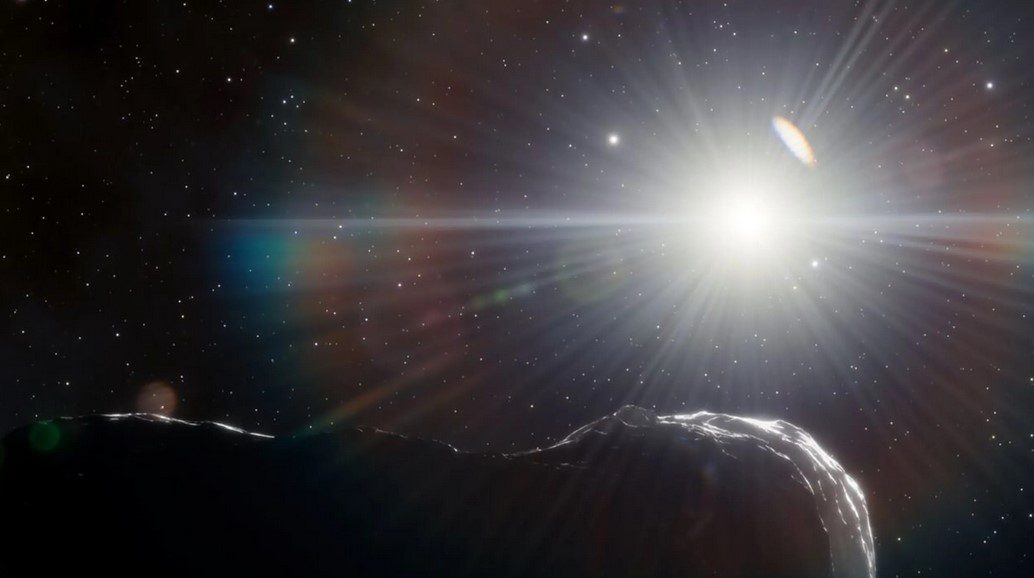
Here’s the real threat: sun-blinded asteroids. Scientists from Brazil, Italy, and France have identified several near-Earth objects in resonance with Venus’s orbit that can’t be detected from Earth in time. These objects—like 2020 SB and 524522—are city-killers, measuring over 1,000 feet and crossing Earth’s path from the daylight side.
NASA’s current early warning system can’t always detect these “blind spot” asteroids. By the time we know they’re here, it could be too late.
Expect more headlines. Four other asteroids are also passing this week, though at safer distances:
-
Two between 100 and 200 feet on Thursday (over 1 million miles away)
-
One smaller rock on Saturday
-
All tracked, none threatening
Still, 2025 OW is a reminder of what’s out there and how fast things can change.
This flyby is safe, but the system isn’t flawless. Not every threat gives you a six-day notice.
